Rhinoplasty: how long does it take before you can sit through a family dinner, or a long flight home, without stitches and tape on your nose?
For a first rhinoplasty on a low nasal bridge, the stitches come out 5–7 days after surgery and daily life resumes within those same 5–7 days. After a revision, plan on 7 days. The fine swelling at the tip keeps settling for months after that.
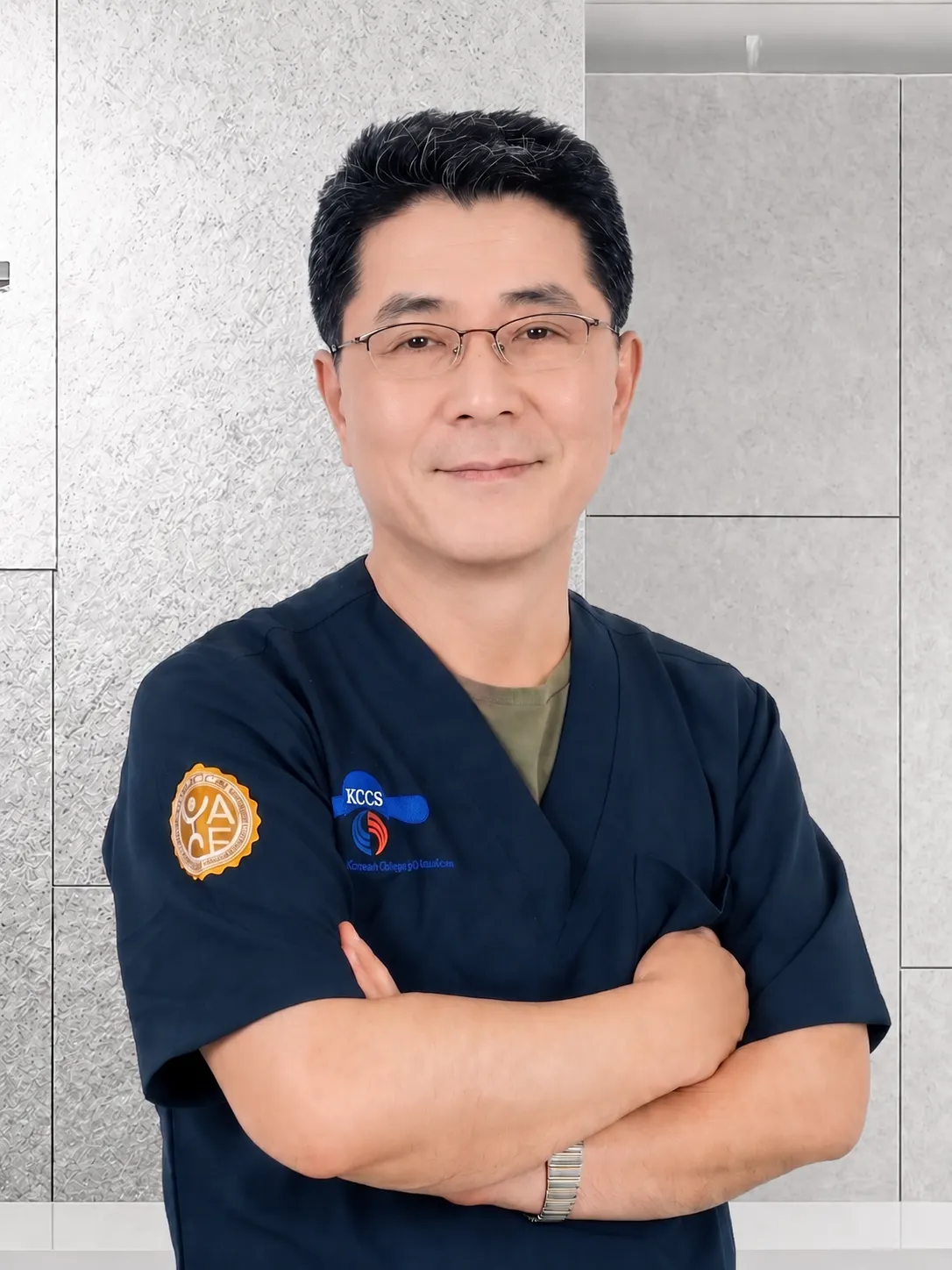
Hello, I'm Dr. Bae Seung-joo, a Director at Pascal Clinic in Sinsa-dong, Seoul, and a plastic surgery specialist with an MD and PhD.
Nose surgery is one of my focus areas, next to scar reconstruction and facelift, and Pascal corrects noses operated on elsewhere as well as doing first surgeries. You meet your surgeon at the consultation, and a medical interpreter for your language is provided at no extra charge, which helps when the conversation is about exact days.
If you already have travel dates, send them on WhatsApp with one front photo and one side photo of your nose. The consultation is free, and a coordinator passes your photos to the surgeon and replies with options, so you can see which of the day counts below fit your own calendar.
Send your dates and nose photos on WhatsApp
Get a free consultation in 1 minuteHow long does the operation itself take?
The operating time is set by what your nose needs, so ask for it once your plan is agreed. A bridge raised with an implant is a shorter operation than tip work with your own cartilage, and a revision usually takes longer again.
Risks and side effects to know
Rhinoplasty for a low nasal bridge raises the height of the bridge and tip, using an implant or your own tissue. Your own cartilage has to be taken from somewhere before it can be shaped, which adds a stage. A revision corrects asymmetry, inflammation, implant movement or a line you didn't want, and the scar left by the first operation makes every layer slower to separate.
Treat surgery day as a whole day. Keep the evening empty, have someone with you if you can, and ask at booking for the expected operating time of your own plan, because that number belongs to your plan, not to rhinoplasty in general.
Three clocks start on surgery day
The question with rhinoplasty, how long does it take, has three answers, because three different things heal at their own pace.
The first clock is the stitches. After a first low-bridge rhinoplasty they come out 5–7 days after surgery. If an external splint or tape is used, it usually comes off around the same time, and that visit is the day most people feel the surgery is behind them.
The second clock is being seen. Daily life resumes within 5–7 days after a first operation and within 7 days after a revision. Any bruising under the eyes usually turns from purple to yellow during that week, and concealer covers most of what's left once the stitches are out.
The third clock is the tip. The bridge settles early, but the skin over the tip is thicker and holds fine swelling for months. Plastic surgeons in the US describe the same pattern: the American Society of Plastic Surgeons notes that initial swelling fades within a few weeks, while the full contour can take up to a year to refine.
What does the first week feel like?
Most people describe the first two or three days as stuffy and puffy more than sharply painful. Each day after that is a little easier, up to the stitch visit.
On the day of surgery and the next morning, your nose may be blocked, so you breathe through your mouth and wake with a dry throat. Sleep with your head raised on two pillows, take the pain medication you're prescribed on schedule, and keep a water bottle by the bed.
Days two and three are often the puffiest, with swelling that spreads to the cheeks and lower eyelids. Cold compresses help when you hold them on the cheeks and keep pressure off the nose. Don't blow your nose; dab it instead.
By days four to six, congestion eases and short walks around the neighborhood feel normal. Avoid bending over, heavy lifting, hot baths, and the jjimjilbang or any sauna, since heat and strain push blood back toward the nose.
Then comes the stitch visit, 5–7 days after surgery. It's quick, and it's the first time you see the new line without tape.
How many days in Seoul should you plan for?
For a first rhinoplasty, book the flight home after the stitch visit, 5–7 days after surgery, and add a spare day or two in case that visit shifts. For a revision, build the same plan around 7 days and leave more slack.
Count forward from surgery day before you book anything. Pascal is open Monday to Friday 10:00–19:00 and Saturday 10:00–17:00, and closed on Sundays and public holidays. If days five to seven fall across a Sunday, Chuseok or Lunar New Year, that visit has fewer days to land on, so shift the surgery date and keep the flight.
Say you're spending three weeks in Seoul with your parents and want a higher bridge. I'd put the consultation in the first days of the stay. Surgery can then follow early, and the stitch visit, the spare days and the first dinners out all fit before you fly. If the exam shows your tip needs your own cartilage, the plan grows and you still have room.
For a revision rhinoplasty, how long does it take before you can fly? Daily life resumes within 7 days, but tissue that has healed once is harder to predict, so I'd keep more spare days than for a first surgery. Our post on revision double jaw surgery makes the same point about operating on a face a second time.
A long flight in the first weeks can make the face puffier, because you sit still for hours in dry cabin air. Book an aisle seat, walk every hour or two, drink water, and use a saline spray if your surgeon allows it. If you're tempted to add face contouring to the same trip, bone surgery runs on its own, longer clock, and our post on cheekbone reduction for a softer face sets it out.
If you're weighing a revision, send the date and details of your earlier nose surgery with a side profile photo taken in daylight, plus the day you need to be back at work. Those three details decide how many spare days you need.
Send your dates and nose photos on WhatsApp
Get a free consultation in 1 minuteBleeding, infection or a slow tip: what can stretch recovery
Most of what happens in the first week is expected and temporary. What stretches the timeline is less common: bleeding in the first days, infection, inflammation around an implant, or a tip that stays full long after the bridge has settled.
Surgery carries risks such as bleeding, infection and inflammation, and your surgeon explains them before you decide. The ASPS list of rhinoplasty risks also includes difficulty breathing through the nose, numbness, skin discoloration, poor healing or scarring, and the possibility of revision surgery. Individual results vary.
It's usually wiser to wait if you have a cold or sinus infection, smoke and can't stop for several weeks around surgery, take blood-thinning medication or supplements you can't safely pause, are pregnant, or injured your nose recently. Bring a list of your medications to the consultation.
An open approach leaves a small incision across the skin between the nostrils, which usually fades well. If a scar from an earlier nose surgery bothers you, our scar revision surgery guide explains how such scars are made flatter or less visible.
Before you fly, ask for a written note of what was done and what was placed or grafted. At home, pain that rises after the first few days, spreading redness, warmth, fever, or swelling on one side that keeps growing needs a local doctor the same day. Take that note with you, and send photos of the change to the clinic on WhatsApp as well.
Doctor's note
If the skin over your tip is thick, the tip will stay soft and full longer than the bridge, and I'd rather you hear that now than discover it in the mirror in week three. It's anatomy, and it settles with time. The extent of surgery is decided at the exam because it depends on what your nose is built from, and that same exam is what sets your number of days.
Your first message
On WhatsApp, a front photo, a side profile in daylight and the dates you'll be in Seoul are enough to start, along with the one question that decides your trip, such as which weekday your stitch visit would fall on. The consultation is free. At your exam in Sinsa, the first thing I look at is the skin thickness over your tip and how much support your cartilage gives, because those two decide how long the last stage of swelling lasts.
Frequently asked questions
Can I fly home the day after the stitches come out?
Many people do, as long as there's no bleeding and the surgeon is satisfied at that visit. A spare day or two after the stitch visit is still wise: it absorbs a visit that moves and gives the swelling a night to settle before hours in a cabin.
When can I wear glasses again?
Heavy frames press right where the bridge is settling. Many surgeons suggest keeping glasses off the nose for several weeks, switching to contact lenses or taping light frames to the forehead. Confirm the timing for your own nose before you leave Seoul.
When can I exercise or swim?
Walking is fine within days. Most surgeons ask you to wait a few weeks before running, heavy lifting or swimming, and longer for contact sports, because a knock or a strain can cause bleeding or shift the new shape.
Can I have eyelid surgery on the same trip?
Pascal does both eyelid and nose surgery, and some people combine them. The swelling from both overlaps around the eyes, so the face takes longer to look settled. Whether it suits you is decided at the exam.
Does a revision need a longer stay than a first rhinoplasty?
Daily life resumes within 7 days after a revision, close to a first surgery. The plan itself follows your exam, because the tissue left by the earlier operation shapes what has to be done, so keep more slack in the calendar.
This article is general information, not medical advice. Individual results vary, and surgery carries risks such as bleeding, infection and inflammation. Your surgeon confirms suitability at an in-person exam. Read the medical disclaimer.
Scar reconstruction · Facelift · Rhinoplasty · Eyelid surgery · Skin