Rhinoplasty: how long does swelling last, and will your nose still look puffy when you board the flight home?
Stitches come out 5–7 days after a first rhinoplasty, and the swelling other people would notice eases over the first few weeks. The fine swelling in the tip is the slow part: it settles over months, and the final outline can take up to a year.
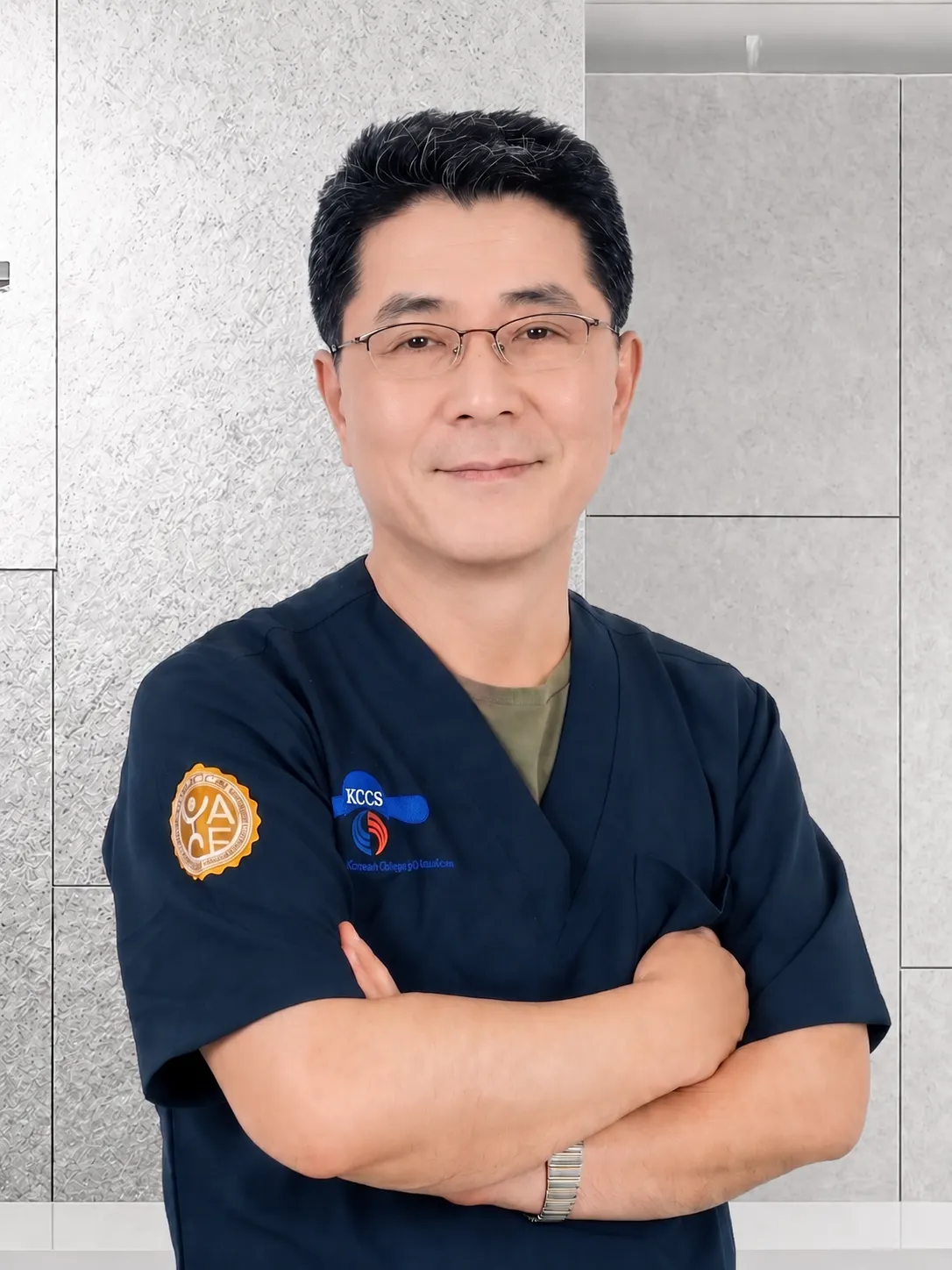
Hello, I'm Dr. Bae Seung-joo, a plastic surgery specialist and Director at Pascal Clinic in Gangnam, Seoul.
First-time and revision rhinoplasty at Pascal are part of my work, and I trained in reconstructive plastic surgery at MD Anderson Cancer Center in Houston (the rest is on my profile page). You meet your surgeon at the consultation, so the swelling timeline you hear comes from the person planning your operation. A medical interpreter for your language is provided at no extra charge, which helps when the question is how your own nose will heal.
If you already have a rough travel window, send front and side photos of your nose plus those dates on WhatsApp. The consultation is free, and the doctor's team replies with a first opinion.
Send nose photos and your travel dates on WhatsApp
Get a free consultation in 1 minuteWhy the tip stays swollen after the bridge looks finished
A nose doesn't swell evenly. Over the bridge, the skin is thin and lies close to bone and cartilage, so once the early fluid drains, the new line shows quickly. Over the tip, the skin is thicker, carries more oil glands and sits on soft tissue that drains slowly. Fluid lingers there, and that is the tip swelling people describe as the nose looking round or full months later.
Skin thickness is the factor I'd want you to understand first. Thick, oily tip skin tends to hold swelling longer than thin skin, and no aftercare routine changes that much. The material matters too. A low-bridge rhinoplasty raises the bridge and tip with an implant or your own tissue, and if cartilage is taken from the ear or rib, that spot swells and aches on its own schedule.
Two things surprise people in the first week. The face is puffier in the morning, because fluid settles while you lie flat, and it eases once you're up and moving. And on the day the nasal splint comes off, the nose can look wider than it did under the tape. That is swelling the splint was holding flat, and it says nothing about the final shape.
Doctor's note
I'd ask you to plan with two calendars. The stitches decide when you can fly. The tip decides when you stop noticing your nose in photos. Mixing the two up is how a well-timed trip turns into three weeks of worrying in front of a mirror.
Rhinoplasty: how long does swelling last in each part of the nose?
| Stage | What you usually notice | What it means for your trip |
|---|---|---|
| Surgery to stitch removal (5–7 days, or 7 after a revision) | Splint or tape, bruising and puffiness around the eyes, a blocked feeling in the nose | You stay in Seoul for this whole stretch |
| The first few weeks | Bruising fades, the bridge looks defined, the nose still looks full from the front | Back to work or class; close-up photos still show it |
| Months, up to about a year | The tip slowly narrows and the outline sharpens | Nothing left to do in Seoul; hold off judging the shape |
That curve matches the rhinoplasty recovery guidance from the American Society of Plastic Surgeons: initial swelling subsides within a few weeks, while the new contour can take up to a year to refine. The return to ordinary life sits inside the first stage. People are usually back to daily routines within the same 5–7 days after a first rhinoplasty, and within 7 after a revision.
How many days should you plan in Seoul?
Count backward from the stitch visit. You need the consultation before surgery, the operation itself, 5–7 days to stitch removal for a first rhinoplasty (7 for a revision), and a little margin after the stitches come out. Book the return flight once your surgeon has confirmed the stitch-removal date, not before.
The clinic calendar matters here. Pascal is open Monday to Friday 10:00–19:00 and Saturday 10:00–17:00, and closed on Sundays and public holidays. If your stitch day lands on a Sunday or a Korean holiday, the visit moves, and your flight has to move with it.
Say you're 27, working in Singapore, with nine days of leave around a public holiday. You land on day one, consult on day two, and if surgery could follow on day three, the stitches would come out around day eight or nine. That leaves no slack at all, and one Korean holiday in the middle breaks the plan. In that case I'd tell you to find two more days or pick a different week. You'd still go back to work with a tip that looks full, and possibly some yellow under the eyes; that is expected, and it isn't something the trip needs to fix.
Face contouring runs on a different, longer swelling curve, so if you were also considering cheekbone reduction and what it involves, treat that as its own trip question. A treatment away from the face, such as Mira Dry for underarm sweating, adds nothing to facial swelling, though it has aftercare of its own.
Put your dates in the WhatsApp message: the day you land, the day you need to fly out, and whether this would be a first surgery or a revision. A Sunday or holiday inside that window is much easier to catch before the ticket is paid for.
Send nose photos and your travel dates on WhatsApp
Get a free consultation in 1 minuteSwelling that's normal, and swelling that isn't
In the first days, these are expected: puffiness and bruising around the eyes, a stuffy nose, a numb tip, a nose that looks bigger in the morning, and small differences between the two sides while fluid drains. They ease gradually, the bruising first and the tip last.
These are not part of normal swelling and need a doctor the same day: swelling that suddenly increases on one side, especially with throbbing pain; redness and heat spreading over the nose; fever; bleeding that keeps going despite gentle pressure; discharge from the incision; or breathing that gets worse instead of better. They can point to a blood collection, infection or inflammation.
Risks and infection: what to watch for
Surgery carries risks such as bleeding, infection and inflammation, and I explain them before you decide. The rhinoplasty safety page from the American Society of Plastic Surgeons also lists difficulty breathing through the nose, numbness, an uneven-looking nose, swelling or discoloration that persists, scarring, a hole in the septum and the possibility of further surgery. Individual results vary, and your surgeon confirms suitability at an in-person exam.
Some people are better off waiting. That includes anyone with an active sinus or skin infection, anyone pregnant or breastfeeding, anyone whose nose is still healing from an injury, and anyone whose earlier nose surgery hasn't settled yet. If you take blood thinners or supplements that affect bleeding, tell your surgeon early, and don't stop prescribed medicine on your own. Smoking slows healing, and swelling with it.
Once you're home, keep your surgery records and medication list with you. If one of the warning signs appears, see a doctor locally that day, or go to an emergency department for heavy bleeding or trouble breathing, and send photos and a short description on WhatsApp so your surgeon's team has the details too.
Does revision rhinoplasty swell longer?
Often, yes. Plan on 7 days to stitch removal instead of 5–7. Tissue that has been operated on before carries scar tissue, and tip skin that has been lifted once tends to hold fluid longer the second time. Expect the full settling of the tip to stretch toward the long end of that months-long curve.
Timing the revision matters as much as the operation. Most surgeons want the first surgery to have settled before revising, because correcting swollen tissue means guessing at the shape underneath. The same wait-for-the-tissue logic runs through other revisions in the face, from eyelids to revision double jaw surgery and relapse. If you're unsure whether your nose is ready, send photos and the details of your previous surgery; the team tells you whether a revision is likely to help.
What helps the swelling go down faster?
Gravity and patience do most of the work. Sleep with your head raised on extra pillows in the first days, and hold cool packs on the cheeks and around the eyes without pressing on the nose. Skip bending, heavy lifting and hard workouts until your surgeon clears them, because a raised pulse sends more fluid into the face.
Salt and alcohol make the face hold water, so the week in Seoul is a poor time for late-night ramyeon and soju. Keep a hat on for bruised skin outdoors. Glasses resting on the bridge press where the shape is still setting, so ask how long to keep their weight off your nose, and pack contact lenses if you wear them.
What doesn't help: massaging or squeezing the tip unless your surgeon tells you to, or any tea, cream or supplement sold as a swelling shortcut. The tip follows its own clock.
Before you lock in flights, send front and side photos taken in daylight on WhatsApp, with your travel window and any event in the months afterward you'd like the nose settled for, such as a wedding or a new passport photo. The consultation is free. Deposit and payment are arranged after the consultation, so ask about them in the same thread whenever you're ready to book. On the day we meet, the first thing I'll look at is the skin over your tip, because that sets the long half of your swelling timeline. Pascal Clinic is at 157 Dosan-daero, Sinung Tower Two (6F–8F), a short walk from Sinsa Station Exit 8.
Frequently asked questions
Is it normal for one side of my nose to look more swollen?
In the first weeks, yes. Fluid drains unevenly and shifts toward the side you sleep on, so small differences between sides are common. Swelling that suddenly jumps up on one side with throbbing pain or heat is different: see a doctor the same day.
Will cartilage from my ear or rib change the swelling timeline?
The nose follows the same curve either way. The donor site adds its own swelling and soreness, and rib cartilage in particular can make deep breaths and turning in bed uncomfortable for a while. Tell your surgeon early if you would rather avoid a second site.
Can I fly while my nose is still swollen?
Swelling on its own is not a reason to stay on the ground. Cabin pressure changes can make the nose feel blocked or tight during the flight. What matters is that the stitches are out and your surgeon has checked the nose before you board. Keep any prescribed medicine in your cabin bag.
When will I know what my final nose shape looks like?
Not while you are in Seoul. The bridge is readable within the first few weeks, but the tip keeps refining for months, up to about a year according to the American Society of Plastic Surgeons. Hold off judging the result, or thinking about a correction, until then.
This article is general information, not medical advice. Individual results vary, and surgery carries risks such as bleeding, infection and inflammation. Your surgeon confirms suitability at an in-person exam. Read the medical disclaimer.
Scar reconstruction · Facelift · Rhinoplasty · Eyelid surgery · Skin