Revision double jaw surgery is for a jaw correction that needs attention after surgery, for example when a jaw segment has to be re-fixed or the result has relapsed over time. The most useful first step is to understand why the position moved. This guide explains how Pascal approaches that question with digital planning, and what your in-person exam covers.
When is revision double jaw surgery considered?
Revision double jaw surgery is considered when a jaw segment needs re-fixation, or when the jaw position has relapsed after an earlier correction. Your surgeon decides after reviewing your exam and radiographs, because each jaw position is different.
Why does a jaw correction move after surgery?
After a jaw operation, the team checks the result with a clinical exam and radiographs. The position of the joint segment, which includes the jaw joint, is confirmed at this stage.
If a segment sits out of position, extra fixation may be needed. Displacement can also be a cause of relapse. Pascal describes three common sources of this problem:
- Small errors in the plan can add up during surgery.
- A mismatch between the plan and the bone may only be felt after surgery.
- Re-fixation and relapse are the concerns the planning stage is designed to reduce.
What limits the traditional wafer method?
Traditional planning mounts a dental model on an articulator and carries out model surgery to produce a wafer. This is where errors can enter. The joint segment is also hard to confirm during fixation.
Pascal names four limits of the conventional method:
- Errors can arise during wafer production.
- The joint segment position is hard to check when it is fixed.
- Facial asymmetry is difficult to measure as numbers.
- Interference between segments and the size of gaps are hard to predict.
These limits are the reason for a digital approach. Each one is an area where a revision plan can go wrong if the original plan was not precise.
How does digital planning work?
Pascal uses a CAD/CAM workflow with four steps.
- Pre-surgery analysis. Jaw position and bite are checked from the side view.
- Upper jaw design. The upper-jaw surgery is simulated, with a guide and fixation device designed for it.
- Lower jaw design. The lower-jaw surgery is simulated, with its own guide and fixation device.
- Custom guides and plates. A surgical stent and metal fixation plates are made from the plan, so the segment position and movement are reflected during surgery.
The 3D-CT skull is merged with a laser-scanned dental model. This gives one coordinate system where bone and teeth can be reviewed together. The digital approach is also used to analyse facial asymmetry in more detail.
Who leads the planning?
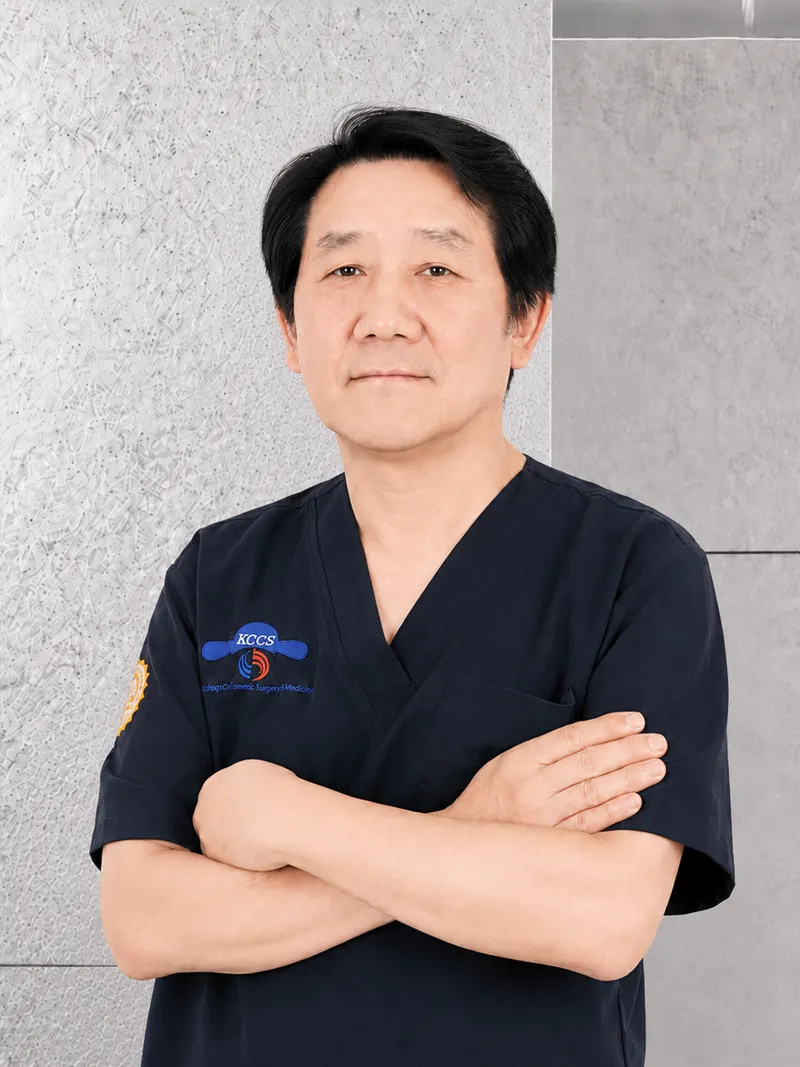
Dr. Choi Jin-young is an MD, PhD and DDS, and an oral and maxillofacial surgeon. Dr. Choi was a chair professor and head of oral and maxillofacial surgery at Seoul National University Dental Hospital, and director of its Orthognathic and Facial Contouring Surgery Center. Dr. Choi now leads two-jaw surgery planning at Pascal, including two-jaw surgery with digital planning and bimaxillary protrusion surgery. You can read his full background on Dr. Choi Jin-young’s profile.
Message the clinic on WhatsApp with a front and side photo and ask for a first opinion on your jaw position.
Get a free consultation in 1 minuteWhat should you expect at your exam?
Your exam is the point where the plan is set. Bring any records you have from earlier treatment.
- Jaw position and bite are checked from the side view.
- The surgical plan is simulated before surgery, so you can review the expected movement.
- Asymmetry is assessed in more detail with the digital analysis.
- Prices for jaw surgery are quoted after an exam, so the final cost depends on your plan. The published prices list other procedures.
Before you travel, ask how the clinic follows up after surgery, including the clinical and radiographic checks on the joint segment.
What are the possible side effects?
Bleeding, infection and inflammation can occur after surgery. The degree varies by person, so your surgeon explains the aftercare steps before surgery and checks your recovery afterwards.
Questions to ask at your exam
- How will you check the position of the joint segment after surgery?
- How is the surgical plan simulated before I agree to surgery?
- What do the custom guides and fixation plates change in my plan?
- What are my options if the joint segment moves after surgery?
- What do the real cases show about outcomes, and how do they vary?
Next step
If you have had a jaw surgery before and want to understand your position, the first step is an exam with the planning team to see whether revision double jaw surgery fits your case. You can also look at our face contouring and jaw surgery treatments to compare the options.
Send your X-rays or scans and ask for a free first opinion from the clinic team.
Get a free consultation in 1 minuteIndividual results vary. Only an in-person exam can confirm whether revision is suitable for your jaw.
Frequently asked questions
What causes a jaw correction to move after surgery?
After surgery, the team checks the position of the joint segment with a clinical exam and radiographs. If it sits out of position, extra fixation may be needed, and displacement can contribute to relapse.
How does digital planning help with revision double jaw surgery?
Pascal merges a 3D-CT skull with a laser-scanned dental model, simulates the surgery on screen, and makes a custom stent and metal fixation plates from that plan.
Who leads the double jaw surgery planning at Pascal?
Dr. Choi Jin-young, an oral and maxillofacial surgeon, leads the two-jaw surgery planning at Pascal Clinic. Pascal also states that the method is based on a technique applied in more than 500 cases at Seoul National University Dental Hospital.
This article is general information, not medical advice. Individual results vary, and surgery carries risks such as bleeding, infection and inflammation. Your surgeon confirms suitability at an in-person exam. Read the medical disclaimer.
Two-jaw surgery · Bimaxillary protrusion · Facial contouring · Sleep apnea jaw advancement