
Does the phrase stem cell on a clinic menu mean something new goes into your face, or is it a fat graft with a longer name?
The stem cell fat transfer Korea clinics advertise is a fat graft at its core. Fat is taken from your abdomen or thigh by liposuction and placed where your face has lost volume. Fat already carries its own stem cells, and some methods concentrate them first. It fills hollows, and it doesn't tighten loose skin.
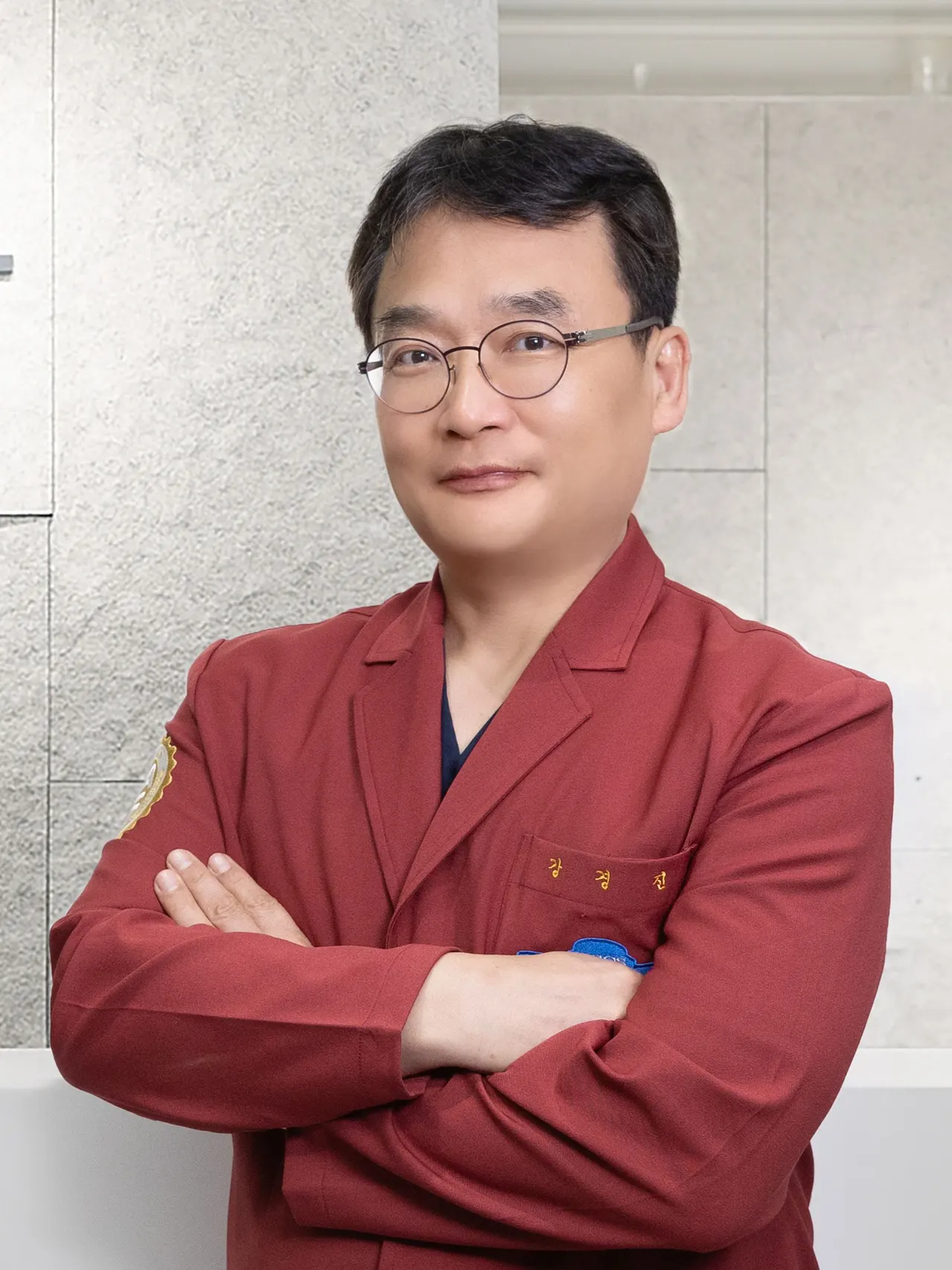
Hello, I'm Dr. Kang Kyoungjin, Representative Director at Pascal Clinic in Seoul.
My doctorate is in anatomy, and I developed a lifting fat grafting method called SAFI, so where fat sits in a face is the subject I started from. My clinic lists facial fat grafting and activated cell therapy as two separate treatments. A medical interpreter for your language is provided at no extra charge.
Asking is easy, because the consultation is free. On WhatsApp, send clear front and side photos and say which area looks hollow to you. A coordinator passes them to your surgeon, and the reply lists options.
Send photos of the hollow area on WhatsApp
Get a free consultation in 1 minuteWhat does stem cell fat transfer mean?
The name covers two or three different things, so start by finding out which one you're being offered.
| Term you'll see | What it is | What to ask |
|---|---|---|
| Fat grafting (fat transfer) | Your own fat moved to an area that has lost volume | How much, into which areas |
| Cell-enriched fat grafting | The same graft, with cells separated from your fat and mixed back in | What is done to the cells, and under which approval |
| Cell therapy on its own | Cells used for skin quality, without adding volume | What change it is meant to produce |
My clinic's menu follows that split. Facial fat grafting restores lost volume with your own fat, and activated cell therapy uses activated cells for skin quality and recovery. So before you ask anyone for a stem cell fat transfer, decide which you want more: volume or skin quality.
How the fat is taken, prepared and placed
There are three steps. A thin cannula removes a small amount of fat, usually from the abdomen or thigh. The fat is cleaned of blood and fluid. Then it's placed through a blunt needle in many thin threads, never as one deposit.
The threads are the point. Think of planting seedlings. Spaced out, each one roots. Pushed into the ground as one clump, the ones in the middle die. Grafted fat has no blood supply of its own on the first day, and each small parcel has to pick one up from the tissue around it. Even with careful placement, part of the graft is absorbed over the first months. What remains after about three months tends to behave like the rest of your fat.
Where do the stem cells in a stem cell fat transfer come from? Fat tissue contains them already, among other supporting cells. A cell-enriched graft separates those cells from a second portion of fat and adds them back, with the aim of helping more of the graft survive.
Is the stem cell part proven?
Less than the name suggests. Fat grafting itself has decades of use behind it. The added cell step has been studied with mixed findings, and I wouldn't promise you that it makes more fat survive in your face.
Regulation deserves a line too, since you're crossing a border. The US Food and Drug Administration tells consumers that stem cell and fat-derived cell products need its approval to be marketed in the United States, that most don't have it, and that it has received reports of infections and other harm. Korea has its own regulator and its own rules. Wherever you're treated, ask what is done to your cells and under which approval.
Part of the appeal of the stem cell fat transfer Korea is known for is the label itself. My view comes from anatomy: results start from an exact understanding of structure. Which layer the fat goes into, and how much goes into each spot, changes the outcome more than what the procedure is called.
Who does stem cell fat transfer suit, and who should look elsewhere?
In short, it suits lost volume: hollow temples, flattened cheeks, a groove under the eye, a face that has thinned with age or weight loss. It also suits people who are tired of repeating filler and have enough fat to donate.
Several problems look similar and need something else:
- Loose skin and jowls need lifting. Volume alone makes a heavy lower face heavier.
- Under-eye bags are fat pushing forward. That is a lower blepharoplasty question, where the fat is repositioned.
- A wide midface caused by bone gets wider with added fat. That decision belongs with cheekbone reduction for a softer face shape, and if you'd travel for it, with planning a trip for cheekbone reduction surgery in Korea.
- A hollow or asymmetry that appeared after jaw surgery may come from bone position, which is the subject of the post on revision double jaw surgery and relapse.
Say you're 44, your temples have hollowed since you lost weight two years ago, and you've had under-eye filler twice. The temples are a volume problem, and with stable weight they are what facial fat grafting is meant for. The under-eye is less clear. Filler may still be sitting there, and what looks like a hollow can be the edge of a bag. Those two areas might get two different answers.
Lumps, uneven take and infection: the risks to weigh
A stem cell fat transfer carries the risks of any fat graft. Swelling and bruising at the face and at the donor site are expected, and for many people the visible part fades over one to two weeks. Early on, the grafted areas can look overfilled.
Fat can survive unevenly, leaving one side fuller. It can form firm lumps or oil cysts. Too much fat is harder to undo than hyaluronic acid filler, which can be dissolved. Bleeding, infection and inflammation are possible, as with any surgery. Rarely, fat injected into a blood vessel can block it, and near the eye that can damage vision or skin. Individual results vary.
As general guidance, wait or skip it if you:
- smoke and can't stop around the procedure
- are losing or gaining weight, or plan to
- take blood thinners or have a bleeding disorder your doctor hasn't cleared
- have an active skin infection in the area
- are pregnant or breastfeeding
After you fly home, a hot, hard, increasingly painful lump or a fever needs a local doctor that day. Any change in vision is an emergency. Send a photo on WhatsApp too. Before leaving Seoul, ask for a written note of how much fat went into each area and what was done to it.
If you're weighing dates, message them on WhatsApp with two facts about yourself: how much your weight has moved in the past year, and which fillers you've had and when. Both change which options make sense for you.
Send photos of the hollow area on WhatsApp
Get a free consultation in 1 minuteBefore you book flights
My clinic is open Monday to Friday 10:00–19:00 and Saturday 10:00–17:00, and closed on Sundays and public holidays. I can't give one stay length for a stem cell fat transfer in Korea, because a single grafted area and a full face with liposuction recover on different schedules. Get the number of days for your own plan before the ticket is bought.
Three things I'd tell a friend. Pack loose trousers, because the donor site is often wrapped or sore. And wait about three months before you judge the result or think about a second session.
What should you ask any clinic that offers stem cell fat transfer?
- Is this plain fat grafting, a cell-enriched graft, or cell therapy on its own?
- If cells are processed, what is done to them and under which approval?
- Who examines me, and is that the surgeon who places the fat?
- How much fat goes into each area, and will I get that in writing?
- What happens if one side takes less than the other?
- Who do I contact once I'm home?
Ask these anywhere, including here. Six plain answers tell you most of what you need to know about a clinic.
Doctor's note
I began in anatomy and built my practice on it, so I see a hollow as a question of structure: which pad of fat has shrunk, and what is holding up the skin above it. Seen that way, the words stem cell matter less than they do on a menu. A small amount of fat in the right layer does more than a large amount under an impressive label. And if what you have is loose skin, I'd tell you that fat is the wrong answer.
There's no deadline on this decision. What settles it for you is whether the area has lost fat or lost support, and a surgeon can tell that with your face in front of them, at 157 Dosan-daero, a short walk from Sinsa Station Exit 8. The consultation is free. To start, send front and side photos on WhatsApp with one question: is this hollow a volume problem?
— Dr. Kang Kyoungjin, Representative Director
Frequently asked questions
How long does grafted fat last?
Part of the graft is absorbed in the first months, and nobody can tell you the exact share in advance. The fat that survives is living tissue, so it tends to stay and to change with your weight like fat elsewhere. Some people choose a second session once the first has settled.
Can I have fat grafting if I still have filler in the same area?
Tell the clinic about every filler and roughly when it was placed. Hyaluronic acid filler can sit in the under-eye area for a long time and change how a hollow looks, so a surgeon may want it dissolved or settled before judging how much fat the area needs. That is confirmed in person.
What decides the cost of fat grafting with a cell step?
The number of areas, how much fat is placed, whether liposuction is also shaping the donor area, whether a cell step is added, and the type of anesthesia. The quote follows your exam. Ask on WhatsApp what applies to your case, with photos; deposit and payment method are settled after the consultation, so you can ask about those in the same message.
Is activated cell therapy the same thing as fat grafting?
No. Pascal lists them as two treatments: facial fat grafting restores lost volume with your own fat, and activated cell therapy uses activated cells for skin quality and recovery. If you're interested in both, say so when you write, and ask whether they belong in one plan for you.
This article is general information, not medical advice. Individual results vary, and surgery carries risks such as bleeding, infection and inflammation. Your surgeon confirms suitability at an in-person exam. Read the medical disclaimer.
Eyelid surgery · Fat grafting · Lifting · Fillers · Skin