Thinking about a stem cell IV Korea trip, but not sure what actually goes into the drip, what it costs, or how many days off you need?
Read this before you book flights around it.
You'll come away knowing what decides the cost, which common review claims hold up, how the methods differ, and how many days to keep in Seoul.
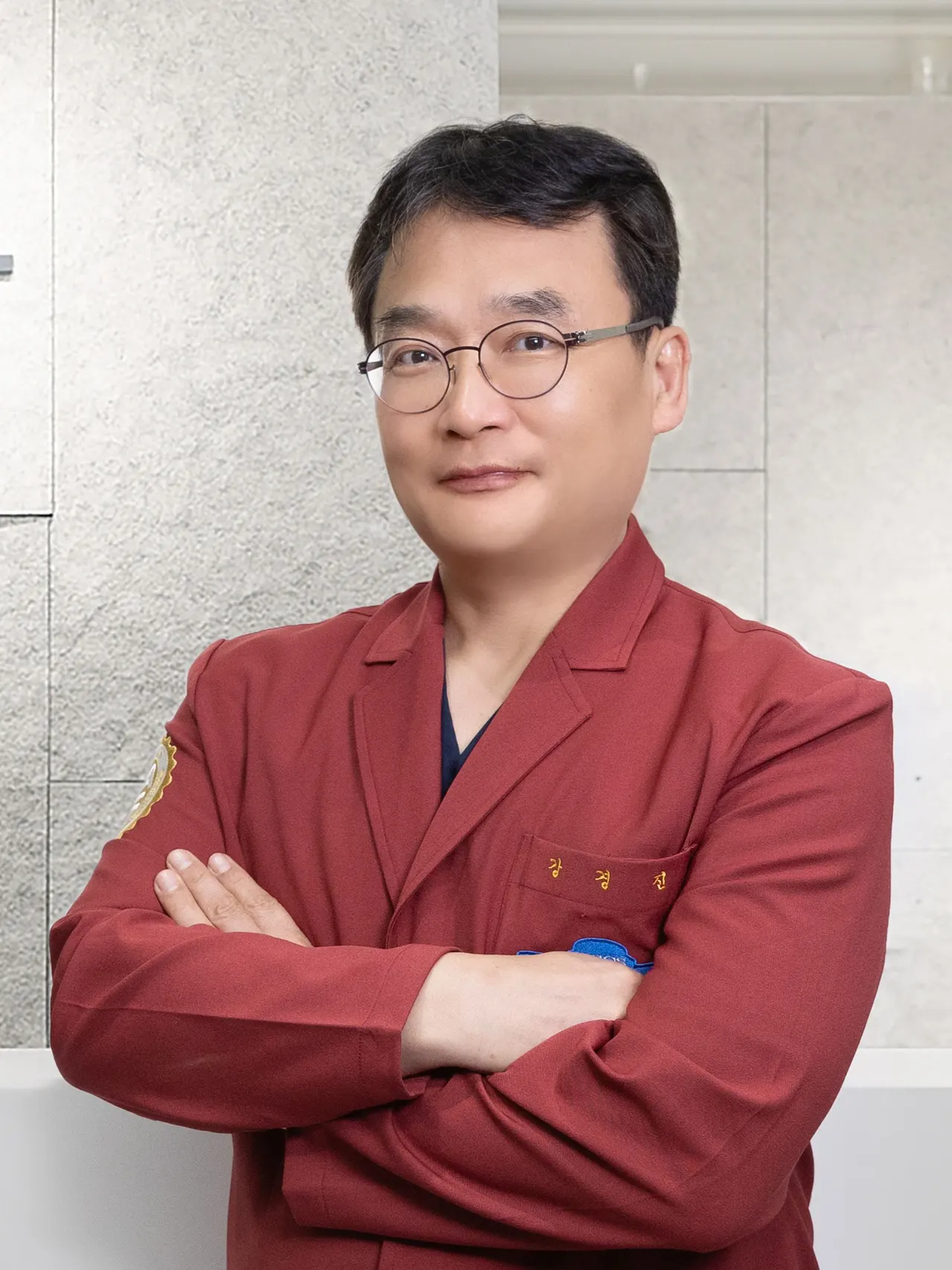
My background is a PhD in anatomy, and I developed the SAFI lifting fat-grafting method. The cell therapy on our menu begins with your own fat, which is the material I work with in fat grafting. We publish our price list online, and the clinic is a short walk from Sinsa Station, Exit 8.
I wrote this because many people plan a trip expecting a whole-body anti-aging drip, then find that what they booked is something else. The Activated Cell Therapy we offer is not an IV drip: cells are taken from your own fat, activated, and injected into the face or the area being treated.
If one area is what bothers you, such as hollow cheeks or skin that thinned after an earlier surgery, send a front and side photo on WhatsApp and ask one question: would a local cell injection be an option for this area?
Send a front and side photo of the area and your travel dates on WhatsApp
Get a free consultation in 1 minuteStem cell IV in Korea and injected cell therapy do different jobs
A drip and an injection can sound alike in an ad. Anatomically they do very different things.
An IV sends whatever is in the bag into your bloodstream. From there it passes through the heart and lungs and around the whole body. Nobody can steer it to your under-eye hollow or a scar on your cheek.
Activated Cell Therapy works the other way around. It uses your own cells and is intended to help regenerate damaged skin and to address loss of elasticity, volume and wrinkles. The cells go into the area that needs them. Evidence for cell therapy used for aesthetic goals is still limited, so I treat it as an option to discuss, not a promise. That is why structure comes first for me: is the hollow lost fat, thin skin, or the shape of the bone underneath? If a photo shows a hollow under skin that still looks thick, I think of lost fat first. If the skin itself looks thin, adding volume alone will not answer it.
Searches for a stem cell drip, a Korean stem cell injection and a stem cell facial in Korea often land on the same pages, yet they describe three different things. A facial usually means a cream or serum applied to the skin. An injection places cells in one area. A drip goes everywhere at once.
The U.S. Food and Drug Administration warns that many stem cell products marketed to patients are not approved. It lists concerns such as reactions at the administration site, cells moving from where they were placed, and products that fail to work as expected (FDA). That caution applies wherever you are treated. Before you pay for any stem cell IV Korea package, ask what product is in the bag and what it is approved for.
Doctor's note
A face that looks tired is rarely one problem. Fat has shifted, skin has thinned, and the bone has changed a little with age. I want to know which layer is missing before I put anything back. Good results start from an exact understanding of structure, not from feel.
What happens on the day of Activated Cell Therapy?
The treatment takes about 90 to 120 minutes, under sleep anesthesia or local anesthesia.
It usually starts by taking some of your own fat. The activated cells are separated from that fat and injected into the face or the area being treated. The cell injection itself leaves no stitches. If fat is harvested, the harvest site has stitches that come out after 5 to 7 days.
The same therapy is also used for recovery after earlier surgery, for scar improvement and for rebuilding damaged skin. Our Activated Cell Therapy page describes the treatment, and the fat grafting and cell therapy overview shows how restoring volume with fat and using activated cells for skin quality sit side by side.
How many days should you keep in Seoul?
Most people return to daily routines within 3 to 5 days. Activated cell care runs 1 to 2 sessions. If fat is harvested, those stitches come out 5 to 7 days after the harvest.
Say you land on a Thursday and treatment is on the Monday. The clinic is open Monday to Friday 10:00 to 19:00 and Saturday 10:00 to 17:00, and closed on Sundays and public holidays. Stitch removal 5 to 7 days after Monday falls on Saturday or Monday, so your flight home is no earlier than that Saturday, nine nights after you land. A seven-night trip ending the following Thursday is too short for it. If treatment slips to Wednesday, removal falls between Monday and Wednesday of the next week, so I would rather you add days than squeeze the stitch timing. Ask at booking which follow-up steps need to happen in Seoul.
The aftercare goes home with you:
- Cold compresses four times a day for the first 2 days.
- No alcohol or smoking for at least 2 weeks.
- Plenty of water, and sun protection on the treated skin.
- No hot saunas, deep cleansing or exfoliation for 2 weeks.
That rules out bathhouse visits for the rest of a short trip, so plan sightseeing that keeps you out of the heat and the sun.
Before you fly, take copies of your treatment records and decide who you would see at home if something feels wrong. The CDC's medical tourism guidance covers both steps.
What decides the cost of stem cell therapy in Korea?
Activated Cell Therapy has no fixed line on our price list. It is quoted after your exam, because the right procedure and extent depend on your anatomy. These factors move the number:
- How much fat needs to be harvested, and from where
- Sleep anesthesia or local anesthesia
- How many areas are treated
- Whether you need one or two activated cell sessions
- How many nights you stay in Seoul, which adds to your own trip budget
Prices on our published price list are in Korean won, before 10% VAT. For a figure for your own case, ask on WhatsApp what it would cost for the area you want treated.
If sagging bothers you more than lost volume, a non-surgical lift may fit a short trip better. Our guide to Ultherapy and Ultherapy Prime covers that route.
What reviews of stem cell IV in Korea get right and wrong
Review threads about any stem cell clinic in Korea tend to repeat three claims.
“It's my own cells, so there's no risk.” Partly true. Using your own cells lowers the concern about immune rejection. Taking fat and injecting cells still carries the risks of any procedure, including bleeding, infection and inflammation.
“I felt more energetic the next day.” People write this often. How you feel after rest and a holiday is not a measurement, and I can't point to medical consensus that a drip does this.
“The skin changed after one session.” Early swelling can look like added volume. Judge the area once swelling has settled, not in the first days.
Is it safe? Risks, and who should wait
Risks and side effects to know
Swelling and bruising at the treated area and at the harvest site are common and usually fade over the following days; the cold compresses in the first 2 days help. Surgery carries risks such as bleeding, infection and inflammation, and your surgeon explains them before you decide. Individual results vary.
As general medicine, it is wiser to wait if you have an active infection or inflammation in the area, are pregnant or breastfeeding, had a laser or peel on the same skin recently, or take blood thinners or have a bleeding disorder. Tell your surgeon about any of these. Whether the treatment fits you is confirmed at an in-person exam.
Once you're home, redness that spreads, an area that turns hot or more painful, or a fever needs a doctor promptly. Bring your treatment records to that visit, and send the clinic photos of what you see.
If you already have a date window, add it to your WhatsApp message along with any surgery you've had in the area.
Send a front and side photo of the area and your travel dates on WhatsApp
Get a free consultation in 1 minuteWhat to send before you book
Two things are enough to start: a front and side photo of the area in daylight, and your travel dates. On WhatsApp, a coordinator passes your photos to your surgeon and replies with options and the matching price-list lines. When you come in, your surgeon examines the area and recommends the treatment that fits your face and your trip.
Frequently asked questions
Do you offer a stem cell IV drip?
The cell therapy on our menu, Activated Cell Therapy, uses cells from your own fat injected into the face or the treated area, not an IV drip. If a drip is what you want, ask the provider what the product is and what it is approved for.
How long does Activated Cell Therapy take?
About 90 to 120 minutes, under sleep anesthesia or local anesthesia. The cell injection leaves no stitches; a fat harvest site has stitches removed after 5 to 7 days.
When can I go sightseeing again?
Most people return to normal daily life within 3 to 5 days. Avoid hot saunas, deep cleansing and exfoliation for 2 weeks, and protect the treated skin from the sun.
Can I get a price before I travel?
Activated Cell Therapy is quoted after your exam, because the amount of fat, the anesthesia and the number of areas differ from person to person. You can ask on WhatsApp what it would cost for your case.
Is a stem cell facial in Korea the same thing?
No. A stem cell facial usually means a cream or serum applied to the skin surface. Activated Cell Therapy injects cells taken from your own fat into the area being treated.
This article is general information, not medical advice. Individual results vary, and surgery carries risks such as bleeding, infection and inflammation. Your surgeon confirms suitability at an in-person exam. Read the medical disclaimer.
Eyelid surgery · Fat grafting · Lifting · Fillers · Skin