Are you weighing Korea revision rhinoplasty vs US revision rhinoplasty and wondering who will look at your nose once you're home, if the second fix needs attention?
The operation is planned the same way in both countries: the surgeon decides whether to adjust an implant or rebuild with your own cartilage, based on what your first surgery left behind. What changes when you fly is timing and follow-up, so the deciding questions are how long ago your last surgery was and who sees you after you land.
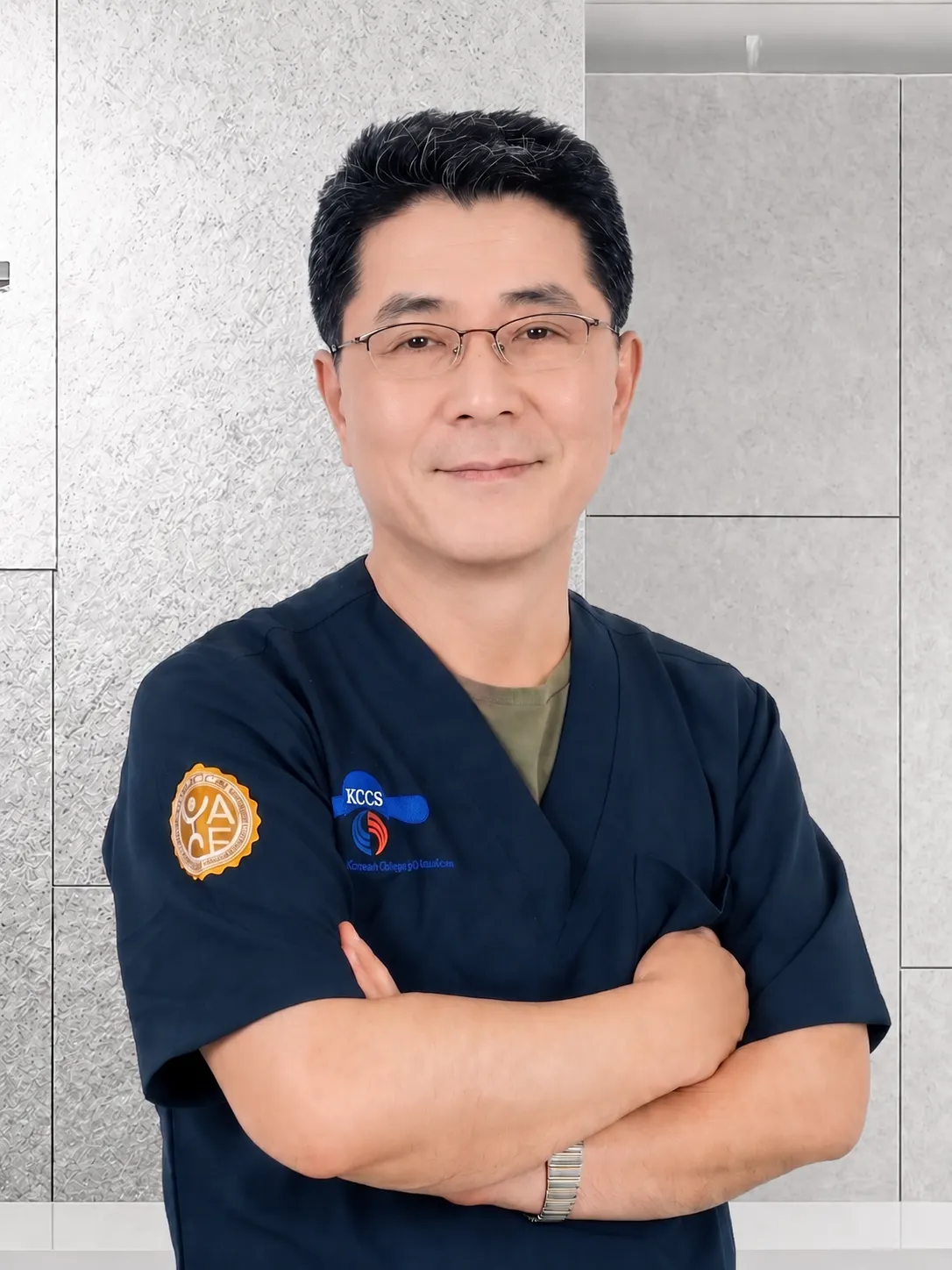
Hello, I'm Dr. Bae Seung-joo, Director at Pascal Clinic in Gangnam, Seoul.
Whether you call it secondary rhinoplasty, a nose job revision or revision rhinoplasty in Seoul, I start from the same things: asymmetry, inflammation, implant movement or a line you can see. Send your photos and the details of your previous surgery, and you get an answer about your own nose to set beside what you've heard at home.
Send your nose photos and surgery history on WhatsApp
Get a free consultation in 1 minuteWhat changes when the revision happens a flight away
Comparing Korea revision rhinoplasty vs US revision rhinoplasty is mostly a comparison of logistics, because the surgical reasoning travels with the surgeon's training. Three things shift when the operating room is on another continent.
Risks and side effects to know
The first is your stay. Fine swelling at the tip keeps settling for months after you're home; the American Society of Plastic Surgeons describes the final contour refining over as long as a year.
A revision is built on what's left: how much septal cartilage was already taken, what implant sits under the skin, where the old incisions run. Abroad, the paperwork is all your surgeon has, so the operative report matters more than any photo.
The third is follow-up. That last part gets its own section below, because it is the one most often left until too late.
Who operates is worth settling early too. You can read my training and past positions on my profile page before you write.
Implant or your own cartilage: which revision fits your nose?
Revision rhinoplasty corrects problems after a previous nose surgery, such as asymmetry, inflammation or an implant that has moved. You can read how revision rhinoplasty is planned at Pascal on its treatment page. The choice usually comes down to one of three approaches, often combined.
| Approach | Who it tends to suit | What to weigh |
|---|---|---|
| Repositioning or replacing the implant | Skin over the bridge still thick and normal in color; the implant has shifted or the height is wrong | No cartilage harvest, but a new implant goes back into a pocket that has been operated on |
| Removing the implant and rebuilding with your own cartilage | Repeated inflammation, thin or shiny skin over the implant, an implant that has moved more than once | A donor site (septum, ear or rib, by what is left) and a longer operation |
When I plan a revision, the skin over the bridge matters to me more than the height you're asking for. Skin stretched over an implant for years can thin, and a thinner layer shows every edge. If it looks shiny or slightly translucent, another implant under it is a trade I'd be slow to make. Your own cartilage is more forgiving there, at the price of a donor site and a longer operation.
Say your silicone implant went in eight years ago, has drifted a little to the left, and the skin over it is still thick and normal in color. That nose may need no cartilage at all: correcting the pocket and repositioning or replacing the implant can be enough. Change one detail. The same nose has turned red and swollen twice in the past year. Now I would plan to take the implant out and rebuild with cartilage, because a pocket that keeps getting inflamed tends to do it again.
If the scar across the base of your nose from an open approach bothers you as much as the shape, the principles in scar revision surgery in Seoul apply to that small incision as well.
Doctor's note
My aim in a revision is a nose that looks like part of your own face, and that usually means less change than people expect. The second operation works with tissue that has already healed once. I would sooner fix the one thing that bothers you most and leave healthy structure alone than work through a list.
When would I tell you not to book the trip yet?
In some situations the choice of Korea revision rhinoplasty vs US revision rhinoplasty is about timing, not surgeons. These are the ones where I would say wait, or deal with it near home first:
- Your last nose surgery was less than about a year ago. Swelling and scar are still changing, and a revision planned on an unsettled nose can miss its target.
- The implant is pressing through the skin, or the nose is red, hot and swelling right now. That needs prompt treatment where you live. A revision can be planned once the infection is under control.
- Breathing is the main complaint. A blocked airway after rhinoplasty is worth an ENT exam at home first, so you know whether the cause is the septum, the nasal valve or swelling inside.
- You can't stay at least a week. Daily life after a revision resumes within 7 days; leaving earlier means flying before anyone has checked the result.
- No doctor at home has agreed to see you afterward.
None of these rule Seoul out for good. They change when, and sometimes in what order.
Planning your days in Seoul
Pascal is at 157 Dosan-daero, Sinung Tower Two (6F–8F), Sinsa-dong, Gangnam-gu, a short walk from Exit 8 of Sinsa Station on Line 3 and the Shinbundang Line. The clinic opens Monday to Friday 10:00–19:00 and Saturday 10:00–17:00, and closes on Sundays and public holidays. Land on a Saturday evening and your first working day there is Monday.
The in-person exam comes first, and your surgeon confirms the plan there, because the right procedure and its extent depend on your anatomy. After surgery, hold the days until daily life resumes, then add a spare day before your flight.
Two things to do before you buy tickets.
Who looks after your nose once you're home?
Most of what you'll notice in the first weeks at home is expected: swelling that is worse in the morning or after salty food, a tip that feels firm, and numbness at the tip that returns slowly. The less common problems are the ones to plan for. The ASPS lists the risks of rhinoplasty, including bleeding, infection, poor wound healing, difficulty breathing, numbness and the possibility of needing another revision. Surgery carries risks such as bleeding, infection and inflammation, and your surgeon explains them before you decide. Individual results vary.
Revision tissue has healed once already, so it can be slower to settle, and an implant pocket that was inflamed before can flare again.
Warning signs that mean a same-day visit to a doctor near you: pain that rises instead of easing, fever, redness spreading over the bridge, bleeding that won't stop with pressure, or skin turning thin and dark over an implant. Get seen locally first, then send the same photos on WhatsApp so Seoul has the picture too.
Two steps before you fly out make this workable. Ask a plastic surgeon or ENT near home, before the trip, whether they will see you after a revision done abroad. And ask Pascal which records from your surgery you'll carry home, so that doctor can read exactly what was done.
Before booking anything, send two things on WhatsApp: the dates you could be in Seoul, and the operative report from your last surgery if you have it. Add one question: what records you'd take home for your doctor there. That way you're asking about your own dates and your own surgery.
Send your nose photos and surgery history on WhatsApp
Get a free consultation in 1 minuteIf you're still between home and Seoul, the first message can be small: one front photo, one side photo, and the year of each earlier surgery. At your exam in Sinsa, the first thing I'll look at is the skin over your bridge, its thickness, its color and how it moves over what's underneath, because that decides which revision is on the table. Send it on WhatsApp whenever you're ready.
Frequently asked questions
Why doesn't Pascal list a fixed price for revision rhinoplasty?
Revision is quoted after an exam because the price follows the extent of surgery and the condition of the tissue after your earlier operation. Implant or your own cartilage, tip work, anesthesia and your days in Seoul all move it. Send photos on WhatsApp to get a range; published prices are in Korean won, before 10% VAT.
Can Pascal correct a nose that was operated on in the US?
Pascal treats revision cases for noses, eyelids and scars after surgery at another clinic. Send your photos and the details of the previous surgery, and the team will tell you whether a revision is likely to help.
Will I meet my surgeon before the plan is set?
Yes. You meet your surgeon at your consultation, and the plan is confirmed at the in-person exam. Nose surgery is one of my focus areas, along with scar reconstruction, facelift and eyelid surgery.
How soon can I fly home after a revision?
On the plane a fresh nose can feel blocked; keep your head up, drink water and avoid blowing your nose.
What if I don't know what cartilage my first surgeon used?
The operative report usually states whether septal cartilage was harvested and which implant was placed. Without it, the exam shows what can be felt and seen, and ear or rib cartilage are the usual alternatives when the septum has already been used.
This article is general information, not medical advice. Individual results vary, and surgery carries risks such as bleeding, infection and inflammation. Your surgeon confirms suitability at an in-person exam. Read the medical disclaimer.
Scar reconstruction · Facelift · Rhinoplasty · Eyelid surgery · Skin