Is one crease now sitting higher than the other, and have you been searching “Korea upper eyelid revision procedure steps and cost” to find out whether a second surgery fits your leave and your savings?
If you only have one block of holiday and a set amount put aside, the cost section and the days section are the two to read slowly.
Four questions get answered below: which revision method matches what went wrong, what happens at each step from first message to flight home, what moves the quote, and the risks of operating on an eyelid a second time. Together they help you decide whether to plan this trip now or hold off.
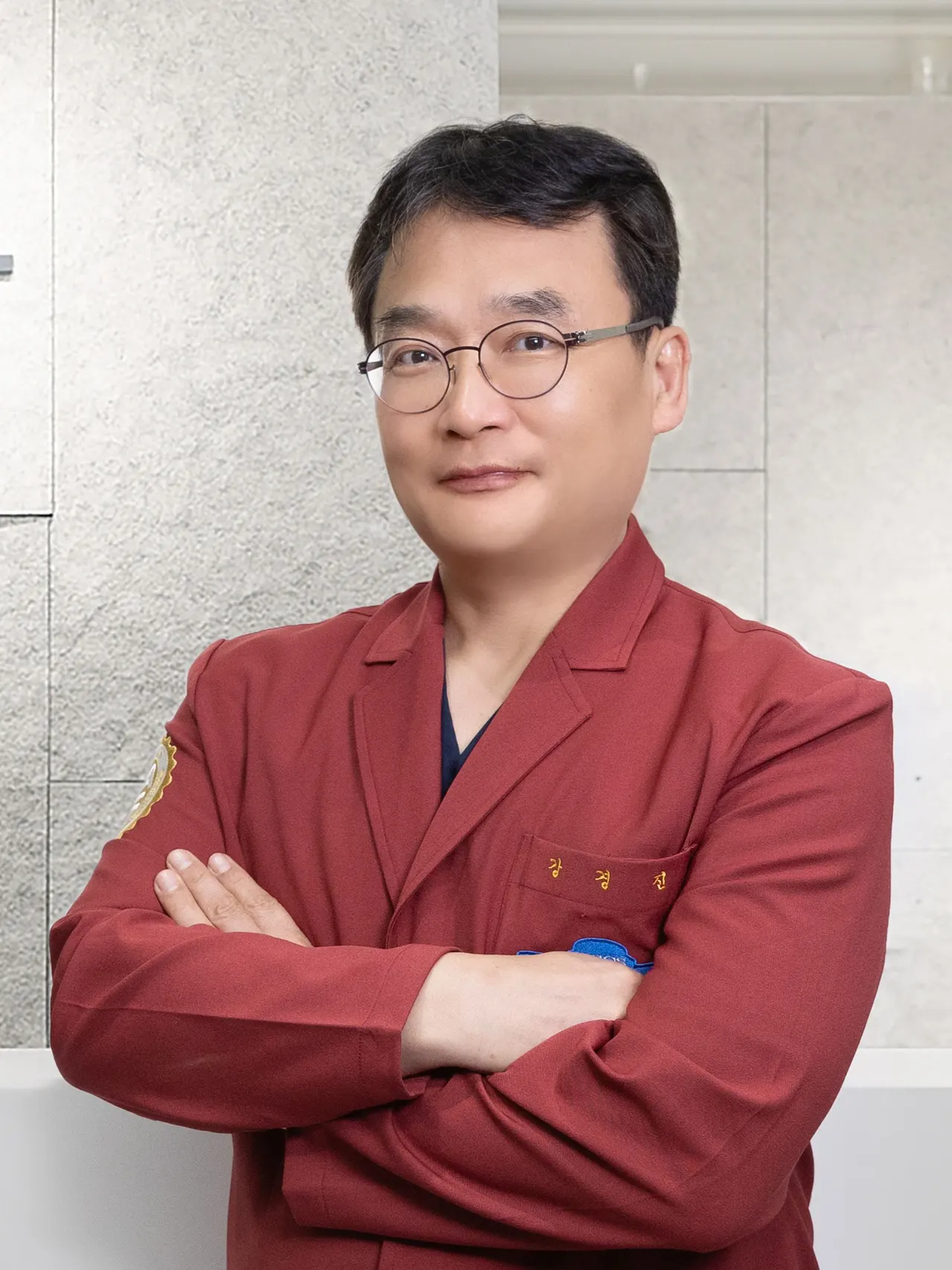
Hello, I'm Dr. Kang Kyoungjin, Representative Director at Pascal Clinic in Seoul. I hold an MD and a PhD in Anatomy, I was formerly a professor of anatomy at Daegu Catholic University School of Medicine, and eyelid surgery is one of my focus areas.
Pascal treats revision cases for eyelids, noses and scars. Our price list is published on the site in Korean won, before 10% VAT, and foreign patients get a medical interpreter for their language at no extra charge.
Most people budget a revision as if it were a first surgery. The quote actually follows the tissue your first operation left behind.
The steps run from an in-person exam, to surgery that releases the old crease and sets a new one (adding ptosis correction or volume only if the exam shows a need), to stitch removal and a check before you fly. The published price for upper eyelid revision is a starting price, and the final quote follows your exam because it is built from what needs correcting and how the tissue looks now.
If you'd like a first read on your own lids, send a clear front photo and a side photo on WhatsApp with the year and type of your first surgery, and ask which kind of correction they look like. The consultation is free.
Send front and side photos of your eyelids on WhatsApp
Get a free consultation in 1 minuteWhat usually went wrong the first time
An eyelid is a moving mechanism. The crease is a fold that forms where the skin is attached to the structures that lift the lid. When that attachment sits too high, lets go, or differs between sides, you see it every time you open your eyes. So I look at function before appearance: the lid has to work well before it can look good.
The problems people bring to an upper eyelid revision tend to fall into a few groups. The crease faded or disappeared, which happens more often after a thread-only method because nothing but the suture holds the fold. If that was your first surgery, the buried-suture double eyelid surgery guide explains how that crease is held and why it can loosen.
Other groups: the crease sits too high and looks fixed or surprised, the two sides don't match, or one eye opens weakly. That last one can be a droopy lid (ptosis) that was there before the first surgery and was never corrected, or one that became easier to see once the fold changed.
A last group is the hollow lid. If too much fat was removed the first time, the upper lid can look sunken and the crease deeper than you wanted.
Which revision method fits which eyelid?
The method follows the problem, and the method is what moves the quote most. This is how the common patterns usually line up.
| What you notice | What is often behind it | What the revision may involve |
|---|---|---|
| Crease faded or gone | Thread loosened, no firm attachment | Re-fixing the crease, often through an incision this time |
| Crease too high | Fold attached high, sometimes too much skin removed | Releasing old adhesions and lowering the fold, limited by the skin left |
| Two sides don't match | Different fold heights or lifting strength | Bringing one or both sides to a shared line |
| One eye opens weakly | Ptosis, present before or unmasked | Adding ptosis correction to the revision |
| Sunken, hollow lid | Fat removed in the first surgery | Restoring volume, for example by fat repositioning or fat grafting |
A crease set too high is the pattern I am most careful with. Lowering it means releasing scar and needing skin that may no longer be there, so sometimes the reachable goal is a lower, softer line than the one you pictured. I would rather say that at the exam than discover it in the operating room.
Ptosis deserves its own sentence. A lid can sit low because the muscle that lifts it, or its tendon, has stretched or weakened (an overview of eyelid ptosis). Re-folding the skin over a weak lift leaves the eye looking just as tired.
Say you had an incisional double eyelid surgery a few years ago. The left crease is now higher, and your left eye looks sleepier in photos. On a front photo those read as one problem. At an exam they may turn out to be two: a fold attached too high, and a lid that lifts less than the right one. If that is what I find, correcting the crease alone would not fix the tired look, so the plan would include ptosis correction on that side. That changes the operation, and it changes the quote.
The procedure steps, from first message to flight home
Before you travel. You send clear front and side photos on WhatsApp with your goal. A coordinator passes them to your surgeon and replies with options and the matching price-list lines. Your surgeon still confirms the plan at an in-person exam.
The exam in Seoul. For a revision, the things that matter are how high each lid lifts, where each fold sits, how much skin is left, how the lid closes, and the scar from the first operation. Risks such as bleeding, infection and inflammation are explained before you decide. You meet your surgeon at this consultation.
Surgery. The general sequence is marking the new line, anaesthesia, opening along or near the old incision, releasing the adhesions that hold the old fold, then setting the new crease. If the exam showed a weak lift, ptosis correction is done in the same operation. Ask at the exam which type of anaesthesia is planned for you.
The first days. Swelling and bruising usually peak early and then ease. Cold compresses, sleeping with your head raised and avoiding heavy exercise and alcohol are standard advice after eyelid surgery.
Stitches out, then home. Stitches generally come out within the first week or so, followed by a check. The final shape of a revised crease keeps settling at home over the following months.
The clinic is open Monday to Friday 10:00–19:00 and Saturday 10:00–17:00, closed Sundays and public holidays. Plan your exam and stitch removal on open days. It's a short walk from Sinsa Station (Line 3 and Shinbundang Line), Exit 8.
What decides the cost of a revision?
In short, this is the cost half of Korea upper eyelid revision procedure steps and cost, worked out for your own lids. No single figure answers it, because a revision price is a starting price that the following factors build on:
- What has to be corrected. Re-setting a faded crease is a smaller operation than lowering a high fold or adding ptosis correction to one or both sides.
- The tissue after your earlier operation. Scar, adhesions and how much skin is left change the work involved, and the final quote reflects them.
- Add-ons. On the price list, a plus sign marks an add-on priced on top of the main procedure, such as fat repositioning added to eyelid surgery.
- VAT and currency. List prices are in Korean won and exclude 10% VAT. Ask your coordinator for a conversion at the time of booking, since exchange rates change.
- Your own trip. Nights in Seoul between surgery and stitch removal, flights and time off are your side of the budget, and a combined trip adds days.
If you're thinking of pairing this with something larger, the cheekbone reduction surgery Korea travel guide shows how much longer a contouring stay runs. An eyelid revision on its own is a shorter plan.
The same rule, where the quote follows what the first operation left behind, holds for second surgeries in general, from revision double jaw surgery to scar revision surgery in Seoul.
To ask what it would cost for your case, add one photo with your eyes gently closed to your front and side photos, name the month you can travel, and ask which price-list lines your lids would fall under. The deposit and how you pay are settled after the consultation, so ask about both in that same message.
Send front and side photos of your eyelids on WhatsApp
Get a free consultation in 1 minuteHow many days in Seoul should you plan?
Work backwards from stitch removal. You need the exam, the surgery, the first swelling days and the stitch-removal visit, all on days the clinic is open. Some people have the exam and surgery close together. Others need a gap to think through a bigger plan. Ask before you book flights which order your dates allow.
You can usually walk around Seoul with sunglasses in the first days, but expect swelling to be visible in photos and on a video call home. If you have a work event right after you land, move it rather than the stitch-removal visit.
Risks and side effects to know
The common reactions after eyelid surgery are swelling, bruising, a tight feeling when closing the eyes and some dryness or watering, mostly easing over the first weeks. The American Society of Plastic Surgeons lists eyelid surgery risks including bleeding, infection, dry eyes, difficulty closing the eyes, asymmetry, unfavorable scarring and the possibility of further surgery.
A revision adds its own limits. Scar tissue makes healing less predictable than a first surgery, a shortage of skin can cap how far a high crease comes down, and a small number of people need another adjustment. Individual results vary.
You may be better off waiting if your first surgery was recent and the tissue is still firm and swollen (many surgeons wait for that scar to soften, which usually takes months), if you have an eye infection or active inflammation, severe dry eye, are pregnant or breastfeeding, or take blood-thinning medication you can't pause under your doctor's advice.
Once you're home, increasing pain, swelling that worsens on one side, discharge or any change in vision needs a doctor promptly. Keep your operative note and medication list with you, and before booking, ask on WhatsApp how follow-up questions are handled after you fly home.
Doctor's note
Good results start from an exact understanding of structure, not from feel. In a revision, that structure has already been changed once, and the photo only shows the surface. That is why the record of your first surgery, even a short note of the method and year, matters to me as much as the photo does.
Who you'll see and how to start
Dr. Bae Seung-joo and I both focus on eyelid surgery, and you meet your surgeon at your consultation. The interpreter for your language is there at no extra charge, so the risk explanation happens in words you follow.
The consultation is free. Send your front and side photos, your travel dates and the year of your first surgery on WhatsApp, and ask one question: can the correction and the stitch removal both fit between those dates? At the exam in Seoul, the first thing that matters to me is how high each lid lifts with your brow held still, because that tells us whether you have a crease problem or a lifting problem.
Frequently asked questions
My first surgery was the buried-suture method. Can that be revised?
Yes. A faded or loosened thread crease is one of the problems upper eyelid revision addresses. Whether thread is used again or the crease is fixed through an incision this time is chosen at the exam from your skin thickness and how the first crease let go.
How long after my first surgery should I wait before a revision?
Many surgeons prefer to wait until swelling has fully gone and the scar has softened, which usually takes months. Earlier correction is considered when there is a functional problem, such as an eye that does not close properly. Include the month and year of your first surgery when you message.
Can I get the quote in US dollars?
Pascal's price lists are in Korean won and exclude 10% VAT. Ask your coordinator for a conversion at the time of booking, because exchange rates change between your first message and your trip.
Will the scar from my first incision disappear?
In many revisions the new incision follows the old line, so the old scar can be taken out with it, but any incision leaves a fine line of its own. Scar treatment makes a scar flatter, narrower or less visible; it never erases it.
Can I fly home with swelling still visible?
Flying with some leftover swelling is common after eyelid surgery once the stitches are out and the check is done. Keep your head raised on the flight, carry your medication and operative note, and avoid rubbing your eyes in the dry cabin air.
This article is general information, not medical advice. Individual results vary, and surgery carries risks such as bleeding, infection and inflammation. Your surgeon confirms suitability at an in-person exam. Read the medical disclaimer.
Eyelid surgery · Fat grafting · Lifting · Fillers · Skin