Is your first eyelid surgery settled enough to justify a Korea upper eyelid revision consultation booking appointment now, or would you fly to Seoul only to be told it's too early?
Book once the first result has stopped changing: the swelling has gone down, the scar has softened, and the crease looks the same in photos taken weeks apart. If your eye can't close fully or feels dry and sore every day, that function problem comes before any change to the crease.
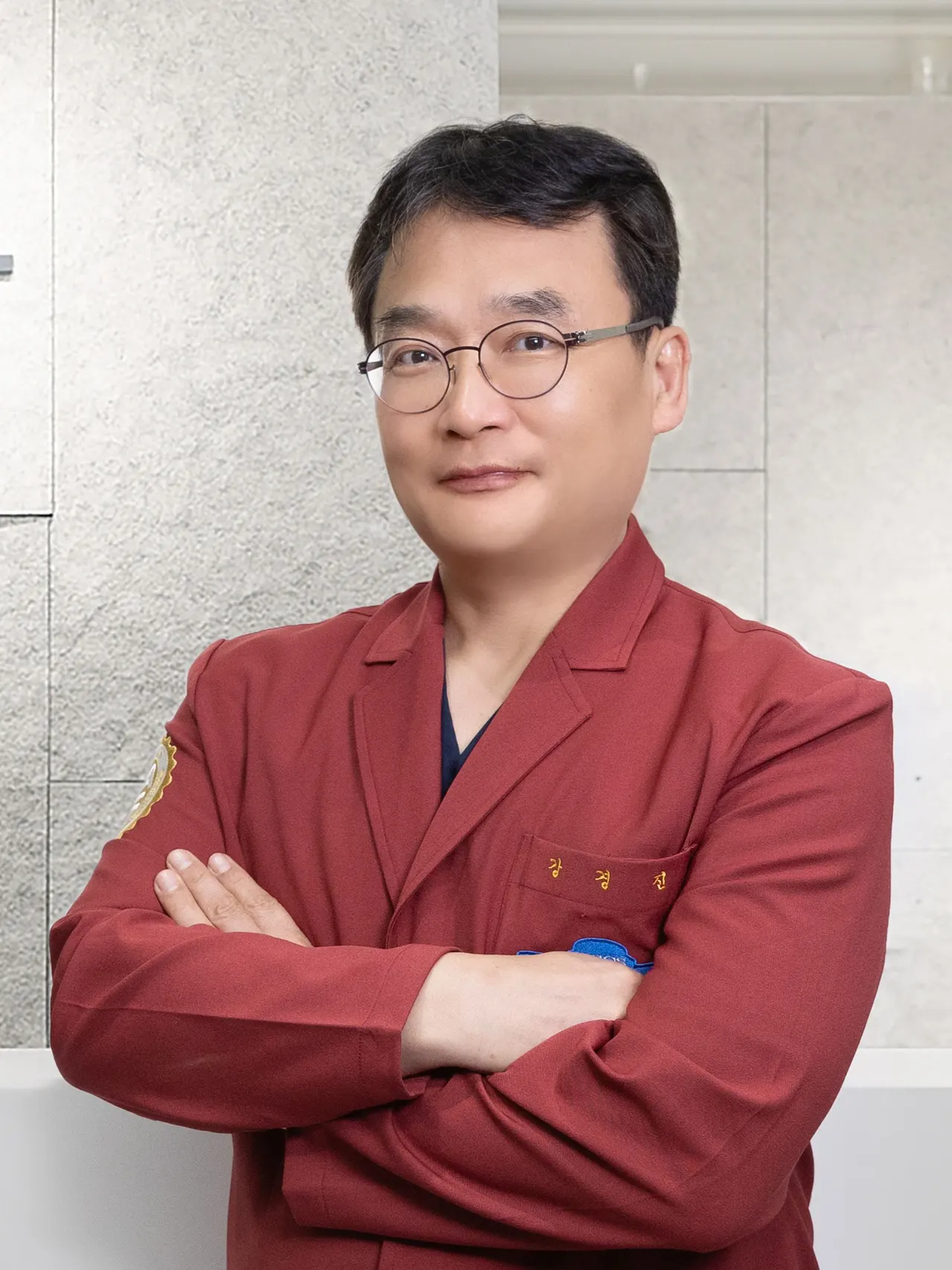
Hello, I'm Dr. Kang Kyoungjin, Representative Director at Pascal Clinic in Seoul.
I hold a PhD in anatomy and taught anatomy at a medical school before moving into plastic surgery, so I judge a revision by how the lid moves before I judge how the crease looks. Pascal treats revision cases for eyelids, and our academic board lists a Revision Blepharoplasty Workshop among its teaching events. If English isn't the language you're most at ease in, a medical interpreter for your language is provided at no extra charge.
The consultation on WhatsApp is free. Send one photo with your eyes open looking straight ahead, one with them gently closed, and a line on what was done the first time and when; the team will tell you whether a revision is likely to help.
Send your open- and closed-eye photos on WhatsApp
Get a free consultation in 1 minuteHow can you tell the first surgery has settled?
After any upper eyelid operation, the lid goes through swelling, then a firm, slightly raised scar, then a slow softening. While that happens, the crease moves. A line that looks too high or too deep early on often drops and softens as the swelling leaves the skin above it.
Risks and side effects to know
Operating on tissue that is still remodeling means cutting through scar that hasn't finished forming. That makes the second result harder to predict, and it uses up skin you may need later. Most surgeons prefer to wait until the scar is soft and pale and the lids stop changing, which commonly takes months rather than weeks.
Here is a check you can do at home that tells more than a single selfie. Take the same two photos, eyes open and gently closed, in the morning and again late in the evening, and repeat them a few weeks apart. If one lid looks heavier only by evening, that points to how the lid lifts as well as to the crease. If the photos still differ from month to month, the result is still moving.
That is the question behind any Korea upper eyelid revision consultation booking appointment: whether you are correcting a finished result or chasing one that is still changing.
When I'd tell you not to book yet
Some reasons to hold off are about timing. Others are about what a second operation can and can't do. These are the ones I'd raise before you buy a flight.
- The lids are still changing. Swelling, a firm scar, or a crease that looks different every few weeks. Waiting costs you time; operating early can cost you a third operation.
- The eye can't close fully, or it is dry and sore most days. A revision that removes more skin can make this worse. It needs to be assessed first, and by a doctor near you if it is getting worse.
- There isn't much skin left. If a lot of skin was removed the first time, lowering a high crease is limited, because the skin between the crease and the lashes is what a lower line would need. Sometimes the change you want isn't achievable with the tissue that remains.
- You want the incision scar gone. Revision can make a scar flatter, narrower or less visible. It never erases it.
- There is an infection, an opening wound or a sudden change in vision. That is not a trip question. See a doctor near you now.
Doctor's note
I think of an eyelid as a moving mechanism. It has to open, close and blink well before the crease is worth adjusting. When a revision request is really about a lid that opens weakly, changing only the crease line treats the shape and leaves the cause in place.
Is the problem the crease, or a lid that opens weakly?
A crease that sits high, fades on one side or looks uneven is usually blamed on the stitching. Sometimes the cause sits deeper. The muscle that lifts the upper lid works weakly, and you raise your eyebrows without noticing to make up for it. That is ptosis, and it changes the plan, because correcting it involves the lifting muscle as well as the crease.
Say you had buried-suture double eyelid surgery and the crease on your left side has faded over time while the right one still holds. If both lids open to the same height, redoing the left crease is the main question. If the left lid also sits lower over the colored part of the eye, a new suture line alone would likely loosen again, and ptosis correction becomes part of the conversation. Photos narrow this down, and your surgeon confirms which one it is by watching your lid move at the in-person exam.
If what bothers you is the incision scar itself rather than the crease, the approach is closer to scar work; this guide to scar revision surgery in Seoul covers how scars are assessed.
Could a revision leave asymmetry or dry eye?
Yes, and some of these become more likely the second time, because the surgeon works through scar tissue and with less spare skin. The American Society of Plastic Surgeons lists eyelid surgery risks that include bleeding, infection, dry eyes, difficulty closing the eyes, unfavorable scarring and the need for revision surgery. Your surgeon explains these before you decide.
The reactions most people get are swelling, bruising, tightness and watery or gritty eyes in the first days. Two lids often swell differently, so they can look uneven while healing. After a revision, swelling usually keeps easing for a week or two at home, often longer than after a first surgery. Individual results vary.
Once you are home, worsening pain, swelling that grows on one side, redness spreading from the incision or any change in vision needs a doctor that same day. Before you book, ask who you should contact if something comes up after you fly home, and carry a copy of your surgical record so a doctor near you can see what was done.
When you write on WhatsApp, add the date of your first surgery and the dates you could be in Seoul, and ask whether stitch removal would fall before your flight. That one answer tells you whether this trip works.
Send your open- and closed-eye photos on WhatsApp
Get a free consultation in 1 minuteKorea upper eyelid revision consultation booking appointment: what to gather and how to plan the days
The most useful thing to collect comes from your first surgery: the operative note or discharge summary, whether it was incisional or buried-suture, and whether skin or fat was removed. Clinics can take a while to release records, so request them before you message anyone. If they aren't available, the date and the type of surgery are enough to start.
Pascal is open Monday to Friday 10:00–19:00 and Saturday 10:00–17:00, and closed on Sundays and public holidays. It is a short walk from Sinsa Station (Line 3 · Shinbundang Line), Exit 8. For an incision-based revision, plan at least a week in Seoul so the stitches come out before you fly. If you land on a Sunday, your exam can't happen until Monday, so count that day out of your week.
What the quote depends on
The quote follows what needs correcting and the state of the tissue your first surgery left. It moves with whether the crease alone is redone, whether ptosis correction or fat repositioning is added, and how much scar has to be released. That's why revision is quoted after the exam. Ask on WhatsApp what it would cost for your case, with your two photos attached. Deposit and payment method are settled after the consultation, so ask about both in the same thread.
If you are also weighing jaw or cheekbone work, the oral & maxillofacial surgeons in the same building plan it, and it runs on a different timeline; the cheekbone reduction travel guide and the post on revision double jaw surgery cover those stays. Adding something unrelated to the trip, such as Mira Dry for underarm sweating, is worth raising in your first message so the schedule accounts for it.
Your first step is small, and the consultation on WhatsApp is free. Send the open-eye and closed-eye photos with the type and date of your first surgery, and ask one question: is my lid ready for revision, or is it still settling? When you come to Seoul, the first thing I'll watch is how each lid rises as you look up from the floor, and how much skin sits between your crease and your lashes, because those two things set what a revision can change.
Frequently asked questions
Can I have the consultation and the revision on the same trip?
It can work if the exam confirms your lid is ready and your dates leave room for stitch removal before the flight. For an incision-based revision, that means at least a week in Seoul. If the exam shows the lid is still settling, you leave knowing what to plan for next time.
What if I can't get records from my first surgery?
Start with what you know: roughly when it was done, whether it was incisional or buried-suture, and anything you were told about skin or fat removal. Photos from before the first surgery, if you have them, also show how your lids opened originally.
Which doctor will I see for an upper eyelid revision?
Dr. Kang focuses on eyelid surgery, fat grafting and lifting, and Dr. Bae focuses on scar reconstruction, facelift, nose and eyelid surgery. You meet your surgeon at your consultation.
Can I get a quote in US dollars?
Pascal's price lists are in Korean won and exclude 10% VAT. Ask your coordinator for a conversion at the time of booking, because exchange rates change between your first message and your trip.
This article is general information, not medical advice. Individual results vary, and surgery carries risks such as bleeding, infection and inflammation. Your surgeon confirms suitability at an in-person exam. Read the medical disclaimer.
Eyelid surgery · Fat grafting · Lifting · Fillers · Skin