Booked a week off and wondering whether it covers the whole Korea upper eyelid revision recovery time frame, or whether you'll fly home with a lid that still looks wrong?
A week covers the part that has to happen in Seoul, not the whole recovery. Plan at least a week here so the stitches come out before you fly. After that, swelling usually keeps easing for a week or two at home, often longer than after a first surgery, and the crease goes on settling for months.
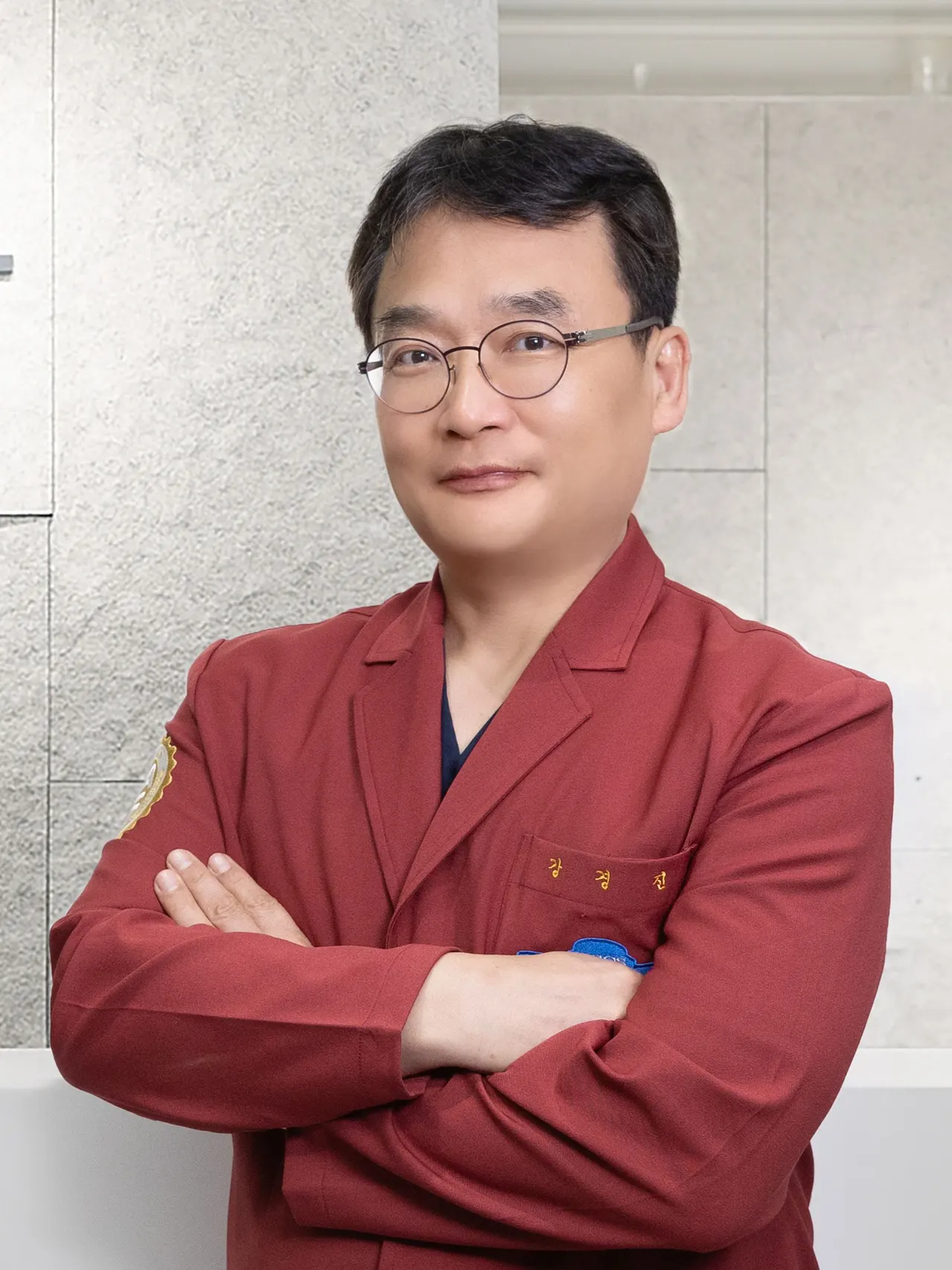
Hello, I'm Dr. Kang Kyoungjin, Representative Director at Pascal Clinic.
I researched and taught anatomy before I moved into plastic surgery, and I see an eyelid as a moving mechanism: it has to open well before the crease can look right. In a revision that matters more, because the first operation already changed the layers inside the lid. A medical interpreter for your language is provided at no extra charge, and you meet your surgeon at the consultation.
The consultation is free. On WhatsApp, send front photos of your eyes open and closed with the date and type of your first surgery, and the team will tell you whether a revision is likely to help.
Send your eye photos and first-surgery date on WhatsApp
Get a free consultation in 1 minuteThree clocks start on surgery day, and only one stops in Seoul
Most people arrive believing that stitches out means recovered. Stitch removal ends the first timeline, and it is the shortest of the three.
| Timeline | Where you'll be | What you'll notice |
|---|---|---|
| Stitches | Seoul, at least a week | The incision closes and the stitches come out before your flight |
| Swelling | Home, a week or two more | Tight, puffy lids, often worse in the morning |
| Settling | Home, over several months | The crease softens and the scar fades from pink |
Risks and side effects to know
Your flight depends on the first clock, which is why the stay is planned around stitch removal. The second is the one that catches people out: a revised lid usually stays puffy longer than it did after the first operation, so the face in the airport mirror isn't the result. The third runs quietly for months. A new crease tends to look a little high and heavy at first, then comes down as the swelling above it drains.
An eyelid incision heals like any other scar, red and firm first, paler and flatter later, which our guide to scar revision methods and recovery covers in more detail. Judge the line from photos taken in the same light a few months apart, and give the mirror in week two very little weight.
Why does a revised eyelid swell longer than the first one?
The surgeon is working through tissue that has already healed once. The first operation left scar between the layers of the lid, and a revision usually means releasing that scar before a new crease will hold. More dissection, through lymph channels that were already disturbed the first time, means fluid drains more slowly.
The upper lid is thin but layered: skin, the orbicularis muscle that closes the eye, a membrane called the septum, fat, and the levator muscle and its tendon, which lift the lid. After a first surgery those layers can be stuck together where the old crease was fixed. If the crease was set too high, the old fixation often has to be undone before a lower one can be made.
Swelling can also differ between the two eyes, especially when only one side needed scar released. Uneven puffiness in the first weeks is common and on its own doesn't mean the revision went wrong.
Doctor's note
If one of your eyes looks heavier by evening, crease height isn't the first thing I would ask about. I'd want to know how strongly that lid lifts, because a crease drawn on a lid that opens weakly will never look even. A lid has to work well before it can look good, and in a revision that order matters even more.
Is it too soon to revise your first surgery?
In short, it can be. Whether to start a revision on this trip comes down to two things: how your lid opens, and whether the first surgery has settled. Many surgeons prefer to wait several months after a first operation, because tissue that is still remodeling is a moving target.
Say your first surgery was at home, the crease sits higher than you wanted, and a surgeon there told you a revision would be difficult. If both lids open fully and the scar is still red and firm, I would usually rather you waited than booked early: cutting into immature scar adds swelling and makes the final height harder to predict. If one lid has opened weaker since that operation, the question becomes function, which time alone may not fix, and that changes the plan.
Upper eyelid revision at Pascal is listed for exactly these cases: a crease that has loosened, uneven lids, or an eye that opens weakly.
Waiting for tissue to settle before going back in applies well beyond eyelids.
Your week in Seoul, from surgery day to the flight home
Seen from the calendar, the Korea upper eyelid revision recovery time frame is mostly spent at home, so the Seoul part is short and specific. The first few days are about keeping swelling down: sleep with your head raised on extra pillows, use cold compresses in short spells, and skip bending, lifting and hot showers. Bruising, if you get it, tends to look worst a couple of days in and then turns yellow as it fades.
Stitch removal is the appointment your flight hangs on. The clinic is open Monday to Friday 10:00–19:00 and Saturday 10:00–17:00, and closed on Sundays and public holidays, so count backwards from a weekday or Saturday when you pick surgery day.
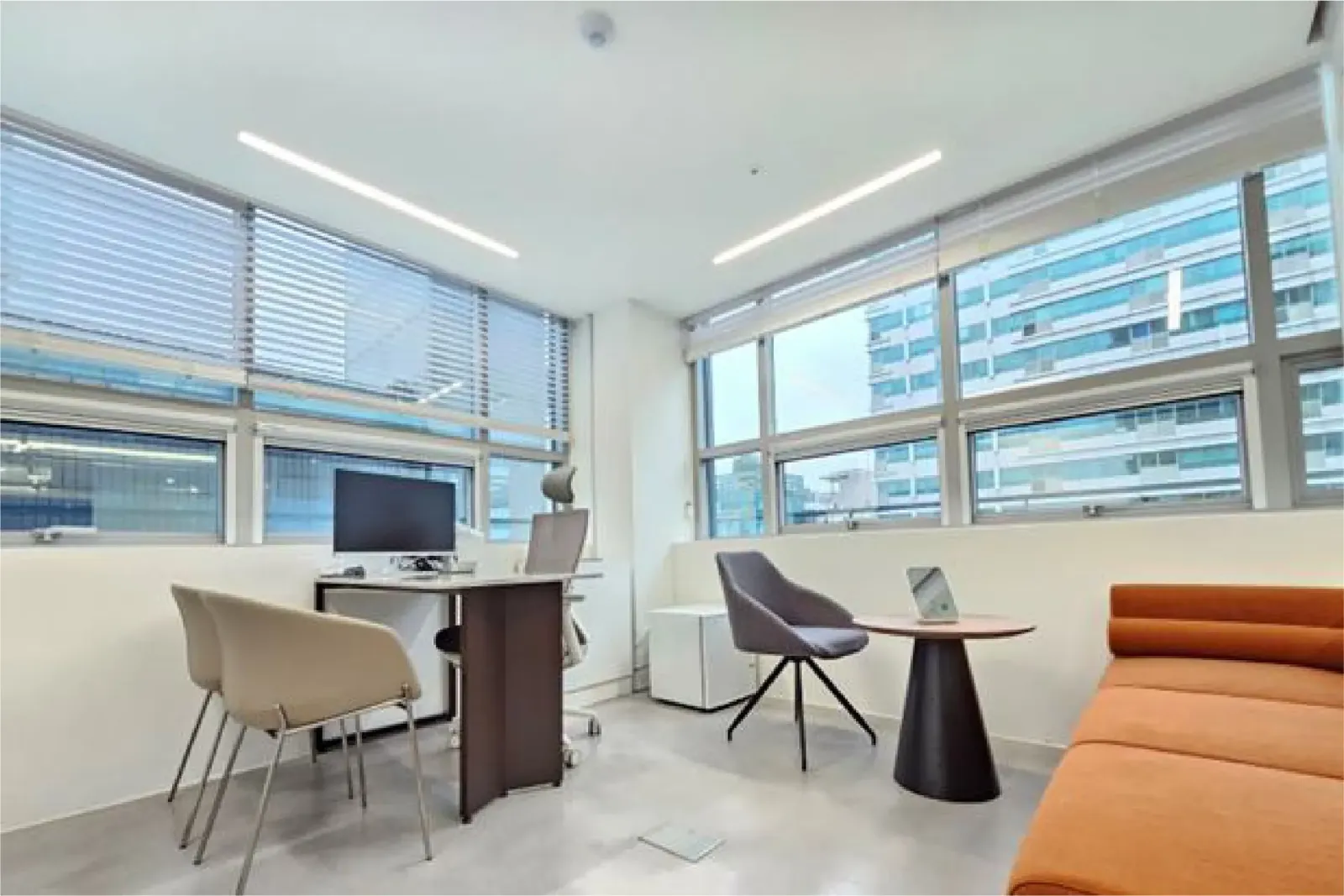
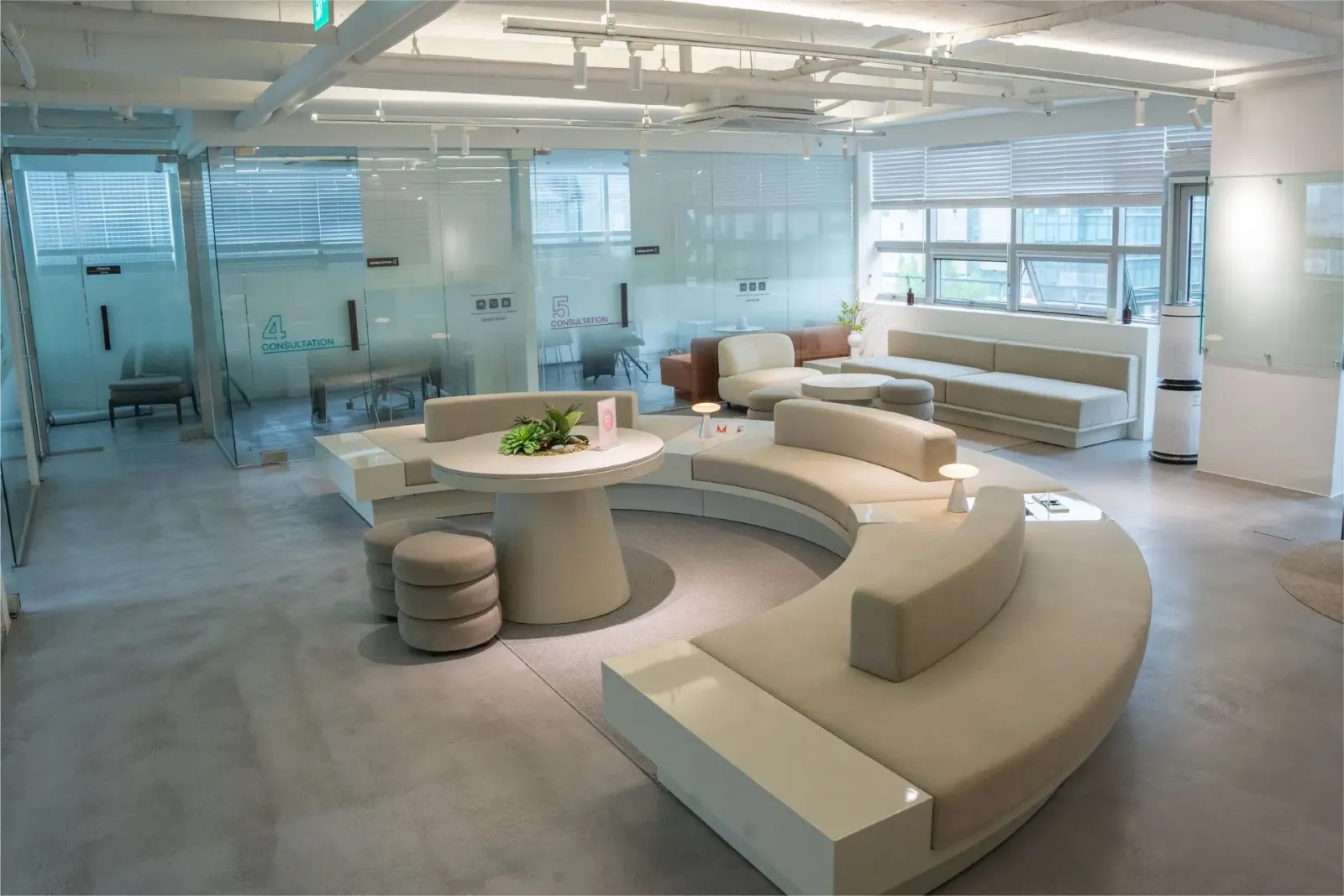
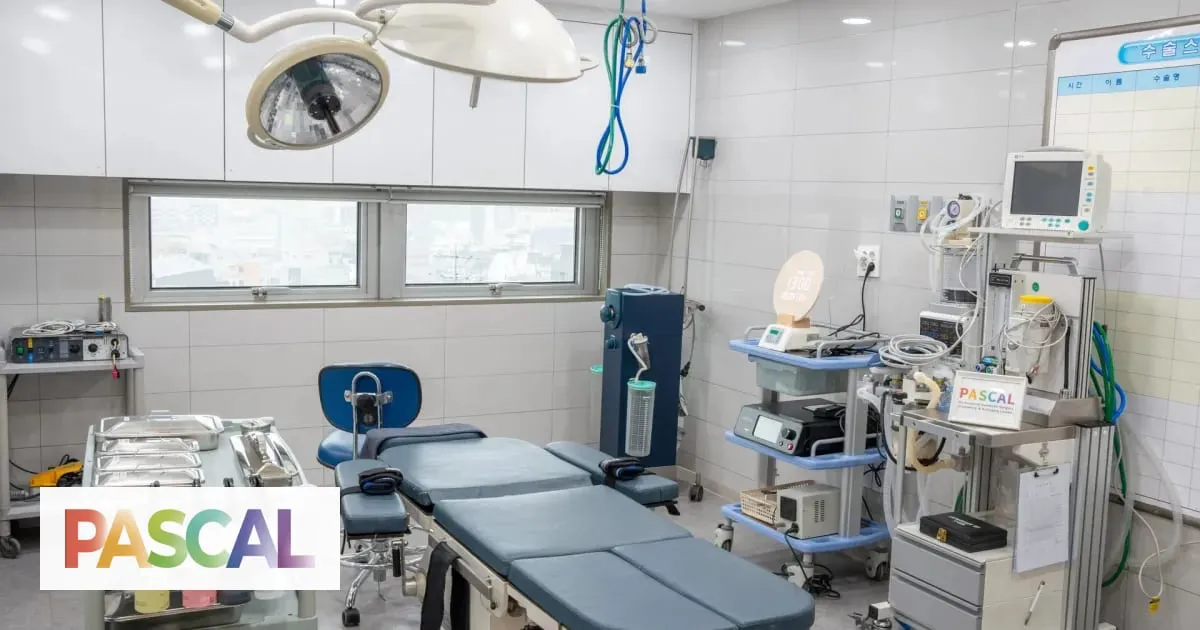
Pascal is at 157 Dosan-daero in Sinsa-dong, a short walk from Sinsa Station Exit 8 (Line 3 and the Shinbundang Line). Plastic surgery, dermatology and oral and maxillofacial surgery share floors 6 to 8 of one building, with operating rooms and recovery rooms on site, so you rest after surgery and return for stitch removal at the same address.
Dermatology on those floors also handles treatments well away from the face, like miraDry for underarm sweating; if you're tempted to fit one into the same trip, mention it before booking, because a second procedure brings its own recovery.
Cabin air is dry, and a lid that is still swollen may not close completely during sleep for a while, which dries the eye faster. Pack lubricating drops (artificial tears) in your hand luggage, and sunglasses for the airport.
If your dates are already fixed, send them on WhatsApp with your photos and ask whether a week works for your case, including which day the stitches would come out. A coordinator passes what you send to your surgeon and replies with options.
Send your eye photos and first-surgery date on WhatsApp
Get a free consultation in 1 minuteDry eyes, uneven creases or a lid that won't close: what's normal once you're home?
Tightness, puffiness, dry or gritty eyes, slight blurring from ointment and some unevenness between the sides are what most people notice, and they usually ease over the weeks after the flight. The fuller list from the American Society of Plastic Surgeons also includes difficulty closing the eyes, dry eyes, bleeding, infection, scarring and the possibility that a further operation is needed. Individual results vary. Surgery carries risks such as bleeding, infection and inflammation, and your surgeon explains them before you decide.
A revision should usually wait if you have an eye infection or inflamed lids, untreated severe dry eye, a thyroid eye condition that is still changing, or a pregnancy. Blood-thinning medicines need to be discussed before any date is set.
Once you're home, some signs need a doctor the same day: pain that is getting worse instead of better, swelling on one side that suddenly increases, any loss of vision, fever, or discharge from the incision. Go to a local emergency department or eye doctor and bring your operative record. For slower questions, like a crease that still looks different between the sides at week three, send dated photos on WhatsApp and ask what is expected at your stage.
Before you pick surgery day
The consultation is free, and the first message can be short: two daylight photos with your eyes open and gently closed, the year of the first operation and whether it was incisional or buried-suture, and the dates you could be in Seoul. The question worth sending with them is whether your first surgery has settled enough to revise on this trip, since that decides your Korea upper eyelid revision recovery time frame more than anything else.
At the exam in Seoul, the first thing I'll want to see is how strongly each lid lifts and where the old crease is anchored, and the plan for height and timing starts from there.
Frequently asked questions
Can the stitches come out at home so I can leave Seoul sooner?
A spot that is slow to close or a reaction around a stitch is far easier to deal with in Seoul than over messages.
When can I wear eye makeup or contact lenses again?
Keep makeup off the incision until it has closed and the stitches are out, and start again with fresh products. Lenses don't touch the lid, but putting them in means pulling at swollen skin, so many people wait until the puffiness has eased; ask for your own date at stitch removal.
Why does my new crease look too high right after surgery?
Swelling sits in the skin above the crease and pushes the fold up and out. As it drains over the following weeks and months, the fold usually comes down. Compare photos taken in the same light and from the same angle, a few months apart.
Could I need another revision after this one?
It's possible. Further surgery is on the standard list of eyelid surgery risks, and a revised lid has more scar to work through. If it comes up, another operation is usually considered only once the tissue has settled again.
What should I take home from Seoul?
Your operative record (what was released, how the crease was fixed and which stitches were used), your medication list and photos taken on stitch-removal day. Any doctor who sees you at home later works from those, and they make a follow-up WhatsApp message far more useful.
This article is general information, not medical advice. Individual results vary, and surgery carries risks such as bleeding, infection and inflammation. Your surgeon confirms suitability at an in-person exam. Read the medical disclaimer.
Eyelid surgery · Fat grafting · Lifting · Fillers · Skin