
Your chin disappears in every side photo, one doctor has mentioned an implant, another has mentioned your jaw, and now you're weighing Korea two jaw surgery vs chin implant. Which one does your face actually need?
Your bite decides it. If your back teeth meet properly and only the chin looks short, a chin implant can change the profile in one short operation. If your lower teeth close well behind your upper teeth, or you snore and wake up tired, the chin is following a jaw that sits back, and two-jaw surgery with orthodontics is what moves it.
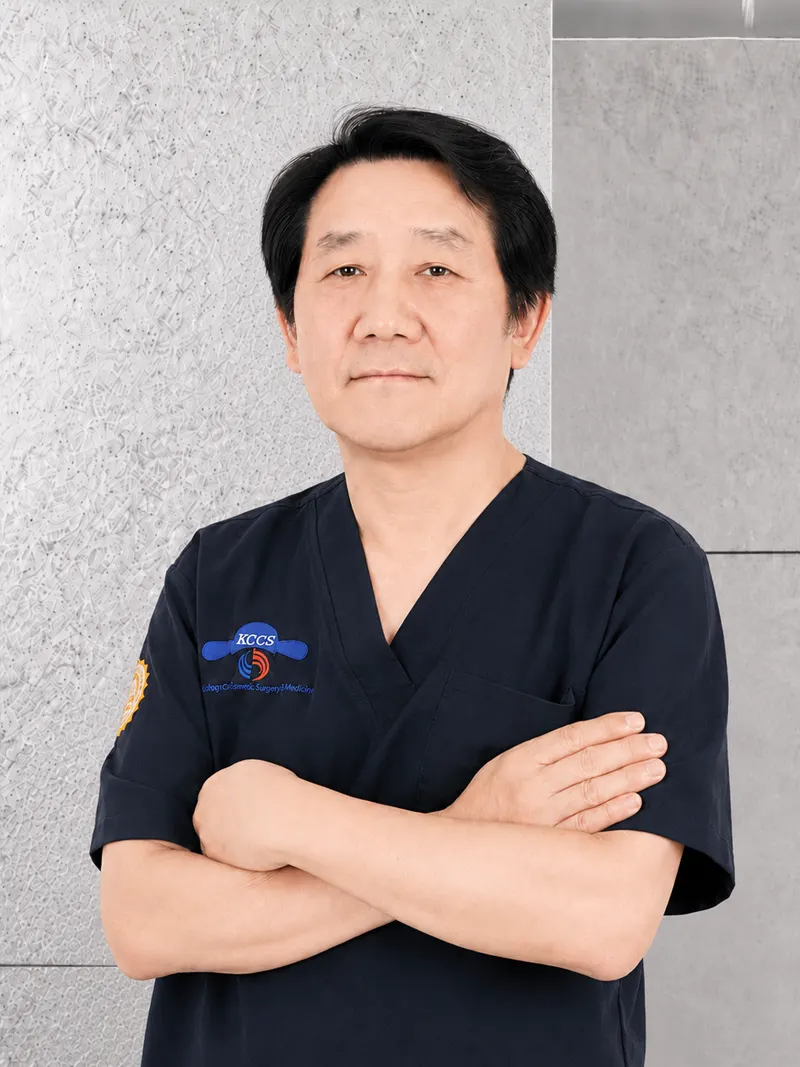
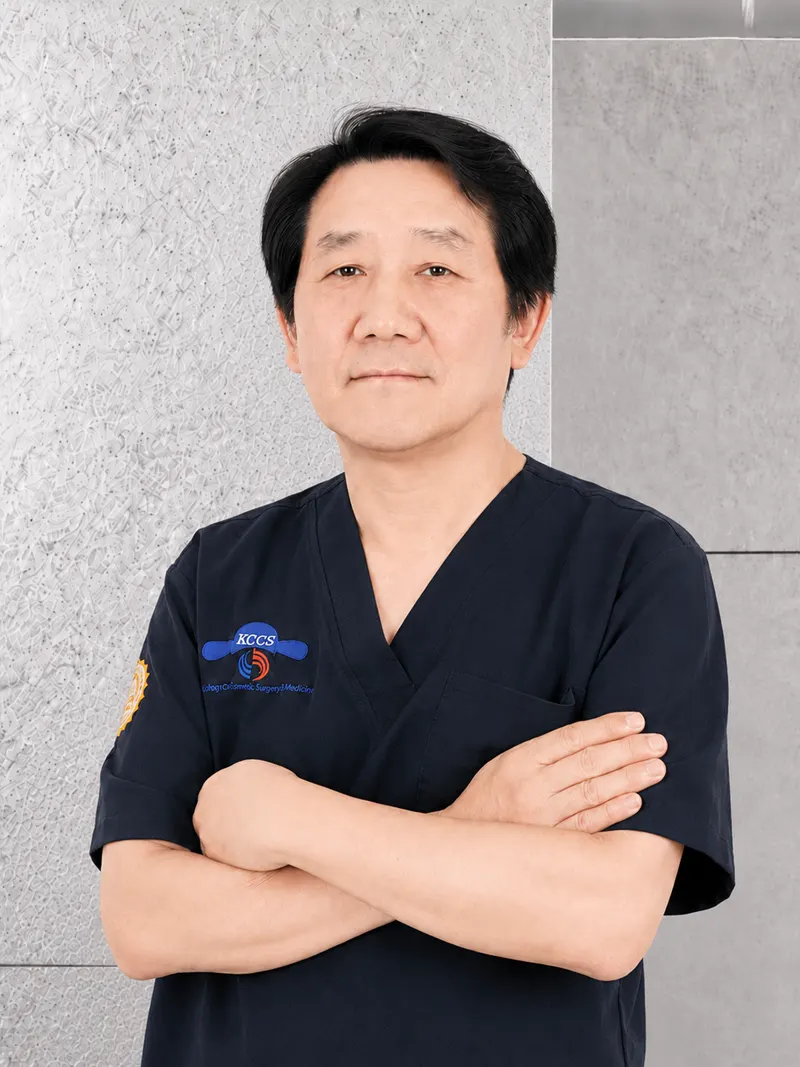
Hello, I'm Dr. Choi Jin-young, Representative Director of Pascal Oral & Maxillofacial Surgery in Seoul.
For 28 years I performed complex jaw-correction surgery at Seoul National University Dental Hospital, where I headed oral and maxillofacial surgery. At Pascal my team plans two-jaw surgery on merged 3D CT and dental scans with custom guides and plates, so the chin's final position comes out of the bite plan. Chin implants are not on Pascal's treatment list, so I describe them here as general medicine. A medical interpreter for your language is provided at no extra charge.
The consultation is free. On WhatsApp, send one side photo with your back teeth together and lips relaxed, plus one front close-up of your teeth biting, and ask whether your chin looks like a bite problem or a chin problem. A coordinator passes your photos to the surgeon and replies with options.
Send a side photo of your bite on WhatsApp
Get a free consultation in 1 minuteIs your chin the problem, or your bite?
The chin is the front edge of the lower jaw. When the whole lower jaw is short or set back, the chin, the lower teeth and the tongue sit back with it. When the jaw and bite are fine but the bony tip is small, only the chin is short. From the side the two can look almost the same. Underneath, they are different problems.
Three checks you can do in a mirror tonight:
- Bite your back teeth together and look at your front teeth from the side. A wide gap between the upper and lower front teeth points to the jaw.
- Close your lips without parting your teeth. If the skin over your chin puckers like orange peel, your lips are straining to meet, which usually means the jaw position rather than the chin tip.
- Slide your lower jaw forward until the front teeth meet edge to edge, then look at your profile. If your face suddenly looks balanced, the difference you want lives in where the jaw sits.
Say you're 31, living in Brisbane, your upper front teeth sit well ahead of the lowers, your chin puckers when you close your lips, and at home you were told the jaw route means a long wait. An implant would push the chin tip forward. The teeth, the lip strain and the narrow space behind your tongue would stay exactly where they are, and the result can look like a chin added to a face that still slopes back. For that face I would not start with an implant. I would start with the scans.
Now say your back teeth meet well, your lips close without effort, and only your chin looks short in photos. That's a chin problem, and a jaw operation would be a large answer to a small question.
Doctor's note
When I look at a profile, the first thing I want to know is where the teeth meet, not where the chin ends. A chin can be built forward in several ways. A bite that doesn't fit stays that way until the jaw moves, and the chin you notice in photos is often only the visible end of that.
What each operation changes
| Two-jaw surgery | Chin implant | |
|---|---|---|
| What moves | Upper and lower jaws, with the teeth | No bone moves; a shaped silicone piece adds projection |
| Your bite | Corrected as part of the plan | Stays as it is |
| Airway behind the tongue | Can widen when the jaws move forward | Stays as it is |
| Early recovery | Initial healing of about 2–6 weeks, with 2–3 months for the jaw to heal | Most people return to work within a week |
The recovery figures are general ones: the jaw-surgery line follows the orthognathic surgery overview on Wikipedia, and the implant line follows the chin surgery page of the American Society of Plastic Surgeons, which describes mild swelling for a few days.
There is a third option people rarely hear about at the start: moving the chin bone itself forward, called genioplasty. The same ASPS page describes bone from the jaw being moved forward instead of adding an implant. In jaw-surgery planning in general, a chin-bone move is sometimes added when the jaws are in place and the chin still needs a few millimetres. Because it's planned from the same scans as the jaws, it follows the bite instead of sitting on top of it.
Does a chin implant help snoring or sleep apnea?
No. An implant sits on the front of the chin bone. The tongue base and the soft tissue of the throat don't move, so the airway stays the size it was.
When a set-back lower jaw narrows the airway, the jaw is the part that has to move. Pascal lists jaw advancement surgery for sleep apnea (maxillomandibular advancement, or MMA), which moves the upper and lower jaw forward to widen the airway behind the soft palate. Not every snorer needs it, and not every set-back jaw causes apnea.
If you snore loudly, wake up unrefreshed, or someone has noticed you stop breathing at night, get a sleep study at home before you plan any trip. That one report changes the conversation. With diagnosed apnea, the question stops being how your chin looks and becomes how far your jaws need to move.
Korea or home: who handles the braces?
For most people weighing Korea two jaw surgery vs chin implant, the operation is the short part of the difference. The long part is the orthodontics.
A chin implant is a self-contained trip: the operation, the early swelling, wound care, and home. Two-jaw surgery is shared between a surgeon and an orthodontist. Braces usually go on before surgery to move the teeth into the position the jaws will need, and stay on afterwards to settle the bite. The pre-surgical phase has traditionally taken up to a year, and newer surgery-first approaches can shorten or skip it for some people.
One thing surprises nearly everyone. While braces prepare you for surgery, your bite and profile often look worse for a while, because the teeth are being moved back to where they belong on the bone and the natural compensation your mouth built up is undone. That's expected, and it's also why an implant can't serve as a halfway step on the way to jaw surgery.
What changes when the surgery is in Seoul and you live elsewhere:
- Your orthodontist at home does months of the work. Before booking anything, ask them whether they will prepare your teeth for surgery planned in Seoul and finish the bite afterwards.
- The plan is built from records. Two-jaw plans at Pascal are made on merged 3D CT and dental scans, so keep your latest orthodontic x-rays, scans and notes ready to share.
- The bite after surgery is finished where you live. Whoever adjusts your braces at home will need a copy of the surgical plan.
If you've had jaw surgery before and the bite has drifted, the questions are different, and the post on revision double jaw surgery and relapse covers them. Because the same oral and maxillofacial team plans jaw and cheekbone surgery, a wide midface sometimes comes up in the same consultation; cheekbone reduction surgery in Korea explains that side. The steps of the operation itself are on the two-jaw surgery treatment page.
If you already wear braces, send your orthodontist's latest x-ray or scan report on WhatsApp with the months you could travel, and ask whether your teeth look ready for surgery or still need time.
Send a side photo of your bite on WhatsApp
Get a free consultation in 1 minuteNumbness, bleeding and a shifting implant: the risks on each side
Surgery carries risks such as bleeding, infection and inflammation, and your surgeon explains them before you decide. Beyond those, each operation has its own.
With two-jaw surgery, the nerve that gives feeling to the lower lip and chin runs through the lower jaw, so numbness there is common afterwards. It's usually temporary; more rarely it stays. Swelling is heavy in the first weeks, opening the mouth is limited, and food is soft or liquid for a while. A bite can also shift back over time, which is what surgeons call relapse.
With a chin implant, the ones to know are infection around the implant, an implant that shifts or tilts, an edge you can feel or see under thin skin, and pressure on the bone underneath over the years. An implant placed through a cut under the chin also leaves a short scar there. Scar treatment can make a scar flatter, narrower or less visible, as the scar revision surgery guide explains, but it never erases it.
Who should wait: anyone whose jaws are still growing, anyone with active gum disease or untreated decay, anyone who is pregnant, and anyone who can't stop smoking around surgery. These are general medical cautions, and your own history may add others.
After you fly home, swelling that increases after the first few days, fever, discharge from a wound, a bite that suddenly feels different, or numbness that spreads are reasons to see a doctor at home promptly. Carry your operative notes and scans so that doctor isn't starting blind, and message Pascal on WhatsApp with a photo the same day. Individual results vary.
Your first consultation is free, and the opening message can be short: the side photo with your teeth together and, if you have one, the stage your braces are at. Ask the question that fits your face: does my chin sit back on its own, or does my whole lower jaw? Pascal is at 157 Dosan-daero, Sinsa-dong, Gangnam-gu, a short walk from Sinsa Station Exit 8, open Monday to Friday 10:00–19:00 and Saturday 10:00–17:00. At your exam there, what I'll want to see first is your bite on the 3D CT and dental scan together, because that is where your chin's position is decided.
Frequently asked questions
Can I get a chin implant now and jaw surgery later?
You can, but it's rarely a clean plan. If jaw surgery later moves the lower jaw forward, an implant already in place becomes one more thing the surgeon has to plan around, and it may need to come out. If the mirror checks point to your bite, get the jaw assessed first and let that answer settle the implant question.
Does Pascal offer chin implants?
Chin implants aren't on Pascal's treatment list. For chin shape where the bite is fine, the clinic's plastic surgery side lists dermal fillers and facial fat grafting. For a set-back jaw, the oral and maxillofacial team plans two-jaw surgery and jaw advancement for sleep apnea.
What decides the cost of two-jaw surgery?
Jaw surgery is quoted after an exam, because the price depends on the extent of surgery. What moves it: one jaw or both, whether a chin-bone move is added, the scan-based planning, and how long you stay in Korea. Deposit and payment method are settled after the consultation, so ask about both on WhatsApp when you send photos for a range.
Will two-jaw surgery leave a scar on my face?
In general, orthognathic surgery is done through cuts inside the mouth, so the jaw moves themselves don't leave a visible facial scar for most people. What you notice on the outside is swelling and numbness. Ask at your consultation whether any part of your own plan needs an outside approach.
Can I have jaw surgery without wearing braces first?
For some bites, yes. Surgery-first approaches move the jaws early and do most of the orthodontics afterwards. Whether it suits you depends on how far your teeth are from where the jaws need them, which is why your orthodontist's records matter before you pick travel dates.
This article is general information, not medical advice. Individual results vary, and surgery carries risks such as bleeding, infection and inflammation. Your surgeon confirms suitability at an in-person exam. Read the medical disclaimer.
Two-jaw surgery · Bimaxillary protrusion · Facial contouring · Sleep apnea jaw advancement