Told by your orthodontist that both jaws need to move, and comparing Korea two jaw surgery vs one jaw surgery because one sounds like half the operation for the same underbite?
One-jaw surgery fits when only one jaw is out of position and the other sits where it should. When both contribute, as with an underbite plus a flat midface, a tilted smile line or a long lower face, moving one jaw far enough to make the teeth meet usually distorts the profile, and two smaller moves suit the face better. The 3D scans show which jaw is off.
Hello, I'm Dr. Choi Jin-young, Representative Director of Pascal Oral & Maxillofacial Surgery in Seoul.
I performed complex orthognathic surgery at Seoul National University Dental Hospital for 28 years, where I was chair professor and head of oral and maxillofacial surgery, and I am now an emeritus professor of Seoul National University. At Pascal I lead the team that plans jaw surgery on merged 3D CT and dental scans, with custom guides and plates, so the one-or-two question is settled on your own scans. A medical interpreter for your language is provided at no extra charge if English isn't the language you think in.
Send a front photo and a side profile with your teeth together, plus your orthodontist's diagnosis if you have it, and ask whether your case looks like a one-jaw or a two-jaw problem. The consultation on WhatsApp is free.
Send your profile photo and diagnosis on WhatsApp
Get a free consultation in 1 minuteWhat the scans show that the mirror can't
An underbite in the mirror looks like one thing: the lower teeth sit in front of the upper ones. Underneath, it can be a lower jaw that grew too far forward, an upper jaw that grew too little, or both. The same goes for a receding chin or an open bite. The bite tells you the two jaws don't meet. It doesn't tell you which one is out of place.
Your own profile gives a hint before any scan. If the area beside your nose and under your cheekbones looks flat and your upper lip seems to sit back, the upper jaw is often part of the problem. If your midface looks full and only the chin and lower lip push forward, the lower jaw may be the main contributor.
Merged 3D CT and dental scans turn that impression into measurements: where each jaw sits against the skull, whether the bite plane tilts, and how far the left and right sides differ.
When is moving one jaw enough?
For anyone comparing Korea two jaw surgery vs one jaw options, the deciding point is where the discrepancy lives. Single-jaw surgery is the right size of operation when it lives in one jaw. A lower jaw that sits forward with a well-placed upper jaw and a level smile line is the classic case, and so is a set-back lower jaw with a normal midface. One jaw also means a shorter operation and fewer bone cuts.
The trade-off appears when the problem is shared. Moving only the lower jaw back to fix an underbite that partly comes from a small upper jaw means pushing it further than its own position justifies. The chin and lower lip retreat, the flat midface stays flat, and setting a lower jaw well back can also crowd the space behind the tongue, which matters if you snore or have sleep apnea.
The jaw procedures on our list are two-jaw surgery with digital planning, bimaxillary protrusion surgery for a mouth that pushes forward, and jaw advancement for sleep apnea. Single-jaw surgery isn't listed as a separate item, so if your scans point to a one-jaw problem, ask directly whether it can be done here.
Three reasons both jaws move
Two-jaw surgery covers more than one kind of movement, and the procedures on our list move both jaws for different goals.
| Situation | How the jaws usually move | Procedure on our list |
|---|---|---|
| Underbite, open bite, asymmetry or tilted bite involving both jaws | Each jaw repositioned so they meet in balance | Two-jaw surgery |
| Lips and teeth pushed forward, strain to close the lips | Front parts of both jaws set back | Bimaxillary protrusion surgery |
| Obstructive sleep apnea linked to jaw position | Both jaws moved forward to open the airway | Jaw advancement for sleep apnea (MMA) |
Jaw advancement moves the upper and lower jaw forward to widen the airway behind the soft palate. Its planning starts from the airway, and any change in profile follows from that.
Say your underbite comes with a flat midface: what then?
Say you're in your late twenties, your lower teeth sit in front of the upper ones, the area beside your nose looks hollow, and your chin drifts slightly to one side. Your orthodontist at home has started braces and mentioned surgery. On the scans I would look first at how far the upper jaw sits behind where it should be and whether the bite plane tilts.
If the upper jaw is set back and the bite tilts, moving only the lower jaw cannot level the smile line or fill out the midface. Then I would plan both jaws: the upper forward a little, the lower back a little, and the tilt corrected in the same operation.
If instead the upper jaw measured in a good position and the bite was level, I would tell you the smaller operation matches your problem.
Doctor's note
People often ask me for the smaller operation, and I understand why. My answer depends on one measurement more than any other: where the upper jaw sits. If it is in a good position, I leave it alone. If it isn't, moving only the lower jaw asks one bone to make up for another, and the face usually shows it.
If a diagnosis or scans already exist, send them with your profile photo and ask which jaw the measurements point to.
Send your profile photo and diagnosis on WhatsApp
Get a free consultation in 1 minuteIs recovery from two jaws much harder than from one?
Two-jaw surgery takes longer in the operating room and involves more bone cuts, and the swelling usually reflects that. The broad recovery pattern is similar for both. The orthognathic surgery overview on Wikipedia describes initial healing of about two to six weeks, a further two to four months for the bone to consolidate, and a return to work for most people within two to six weeks. Expect a liquid diet for a period, then soft food, and some weight loss.
For most people abroad, the larger time commitment is the braces. Orthodontic treatment before surgery has traditionally taken up to a year, and braces stay on for a while afterward to fine-tune the bite. Your orthodontist at home is part of the plan from the start, and the surgery dates follow their timeline. Ask at booking how many days to keep in Seoul after the operation, and ask your orthodontist how soon after your return they can see you.
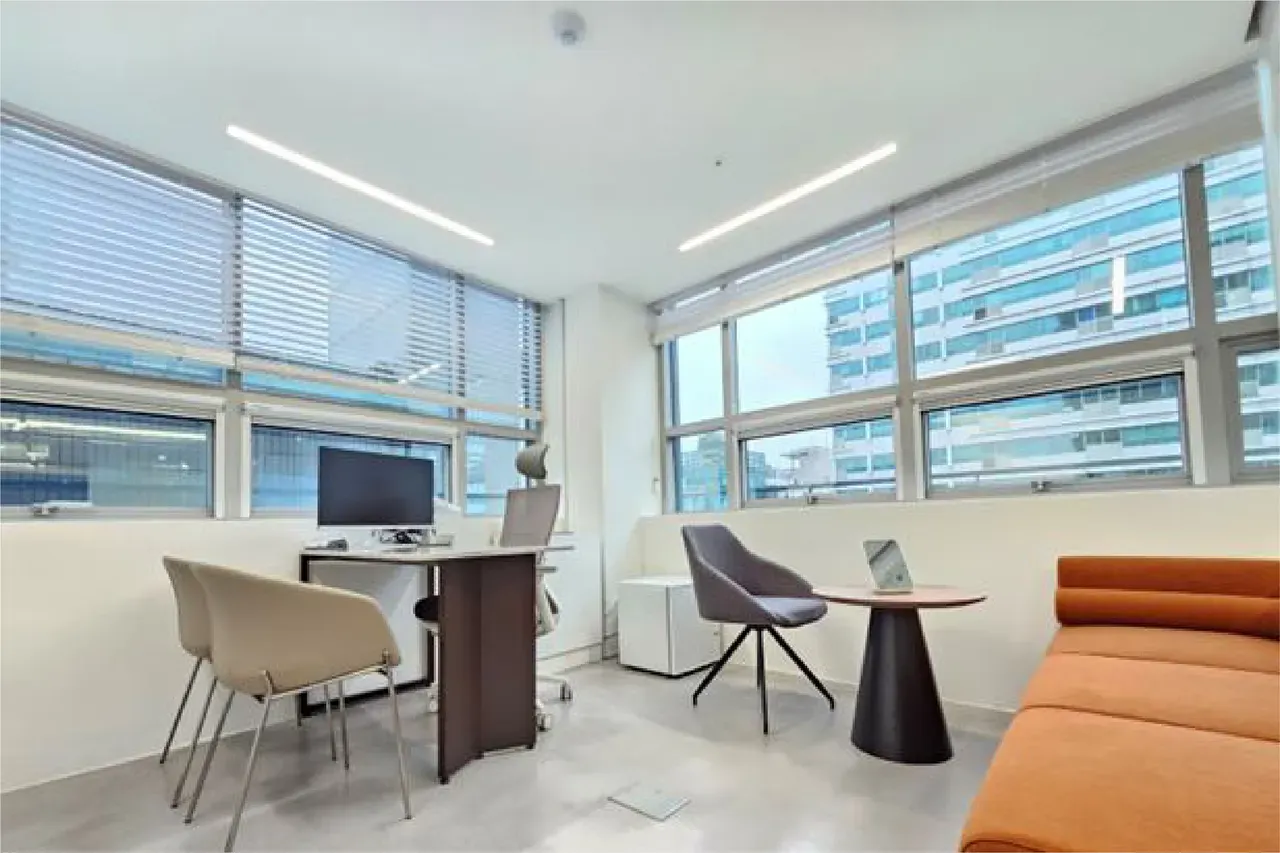
Operating rooms, recovery rooms and a hyperbaric oxygen chamber are on site, in the same building on floors 6 to 8.
Numbness, bleeding and relapse: what can go wrong
Numbness of the lower lip and chin is the effect people notice most after lower-jaw surgery, because the nerve that supplies them runs through the bone being cut. It usually improves over the following months, and in rare cases it lasts. Swelling is greatest in the first days and settles over weeks. Bleeding, infection and inflammation are risks of any surgery, and your surgeon explains them before you decide.
Less common problems include a bite that drifts back toward its old position, jaw joint discomfort, and the need for a further procedure. Individual results vary.
Some people should wait. If your jaws are still growing, surgery is usually postponed until growth has finished. Untreated gum disease, smoking, and conditions that affect bone healing or anesthesia need attention first.
Risks and side effects to know
After you fly home, your orthodontist will see you most often, so give them your operation record, the scan images and the final bite plan. The CDC's guidance on medical tourism advises keeping copies of your records and arranging follow-up care at home before you leave. Worsening swelling, fever, pus, a bite that suddenly feels different or any trouble breathing means seeing a doctor at home the same day and messaging the clinic with photos.
If you've had jaw surgery before, or your concern is width
If you had two-jaw surgery elsewhere and the bite has shifted since, the post on revision double jaw surgery covers that situation. If your bite is fine and what bothers you is how wide the cheeks look, that is a contouring question, and the cheekbone reduction travel guide is the better read.
What should you send before planning the trip?
Start with a front photo and a side profile, teeth together and lips relaxed, plus your orthodontist's diagnosis or any CT you already have. Then ask about your own case: whether the problem looks like one jaw or both, and how that fits the braces timeline your orthodontist gave you. The consultation is free, and a coordinator passes your photos to the surgeon and replies with options.
In Seoul, your CT and dental scans are merged into the 3D plan, and the movement for each jaw is set from where it sits now.
Frequently asked questions
Do I need braces before jaw surgery?
Usually, yes. Braces line up the teeth on each jaw so they fit together once the jaws move. This phase has traditionally taken up to a year, with more adjustment afterward. Surgery-first approaches exist, and whether one suits your bite is a question for the consultation.
Will jaw surgery leave scars on my face?
Jaw repositioning is usually done through incisions inside the mouth, so there is normally no facial scar. Depending on technique, a very small skin puncture is sometimes used to place screws in the lower jaw.
Can moving the jaws treat sleep apnea?
When airway narrowing is linked to jaw position, moving the upper and lower jaw forward widens the airway behind the soft palate. Bring your sleep study report to the first conversation, because the plan starts from it.
Does two-jaw surgery change the face more than one-jaw surgery?
Two-jaw surgery repositions both jaws to correct bite, profile and facial balance, so the change is spread across the middle and lower face. A one-jaw move changes one level only. Which you need depends on where each jaw sits on your scans.
Why isn't there a set price for jaw surgery?
Jaw surgery is quoted after an exam because the price depends on the extent of surgery: one jaw or two, how far each moves, and any added work such as chin changes. Send photos on WhatsApp to get a range for your case.
This article is general information, not medical advice. Individual results vary, and surgery carries risks such as bleeding, infection and inflammation. Your surgeon confirms suitability at an in-person exam. Read the medical disclaimer.

Two-jaw surgery · Bimaxillary protrusion · Facial contouring · Sleep apnea jaw advancement