Ptosis is a drooping upper eyelid: the lid edge sits lower over the eye than it should, on one side or both. If you are reading about ptosis because photos make you look sleepy, or because your forehead feels tired by evening, the useful question is not "how droopy?" but "which part of the lid is failing?" An eyelid exam answers that with four checks.
| What gets checked | What it records | Why it changes the plan |
|---|---|---|
| Lid height | The gap between the light reflex in the center of your pupil and the upper lid edge | Separates true ptosis from a lid that only looks low |
| Levator function | How far the lid travels from looking down to looking up | Points toward tightening the lifting muscle or borrowing lift from the forehead |
| Brow position | Whether your forehead is raising the brows to keep the eyes open | Hidden ptosis often shows only when the brow relaxes |
| Skin and crease | Extra upper-lid skin and where the crease sits | Heavy skin can mimic ptosis and needs a different operation |
The rest of this page walks through each row, so you can read your own exam notes, or your own mirror, with better questions.
What is ptosis, in plain mechanical terms?
Ptosis means the lifting system of the upper eyelid underperforms. The main lifter is the levator muscle, which connects to the lid through a thin tendon sheet called the aponeurosis. When that sheet stretches or loosens, the muscle still pulls, but the lid lags behind.
That stretched-tendon type is the most common acquired form. It is linked with aging, and long-term contact lens wear is thought to play a part, according to the overview of eyelid ptosis on Wikipedia. Other forms behave differently. Congenital ptosis is present from birth and usually involves a poorly developed muscle. Neurogenic ptosis comes from the nerve signal, as in myasthenia gravis or a third-nerve palsy. Mechanical ptosis happens when scar tissue, swelling or a growth weighs the lid down.
The type matters more than the amount of droop. Two lids can sit at the same height for completely different reasons, and the repair follows the reason.
Doctor's note
I taught anatomy at a medical school before I moved into plastic surgery, and I still think of the eyelid as a moving mechanism. It has to work well before it can look good. A lid that sits low is a symptom; the tendon, the muscle or the nerve behind it is the diagnosis.
Lid height is the first ptosis eye measurement
The first ptosis eye measurement is the gap between the reflection of a light in the center of your pupil and the edge of your upper lid. Clinicians call it MRD1. A shorter gap means the lid covers more of the pupil, and comparing both sides shows whether one eye is lower.
This is measured with your gaze straight ahead and your brows relaxed. That detail explains why selfies mislead. A phone held slightly below the face, a tilted chin or a raised brow can make a normal lid look heavy or a heavy lid look fine.
One eye can also influence the other. In some people with ptosis on one side, the brain sends extra lifting signal to both lids, so the better eye looks wider than it really is. When the low lid is corrected, the other one can settle a little. This is one reason surgeons look at both eyes even when only one seems to droop.
Does your levator muscle still move the lid?
Levator function is how far the upper lid travels when you look from fully down to fully up, with the brow held still so the forehead cannot help. Good travel means the muscle works and its tendon can usually be repaired. Poor travel means the lid may need lift from elsewhere.
This single check shapes the operation more than any other:
- Muscle works, tendon stretched. Ptosis surgery usually tightens or reattaches the levator tendon to the lid (levator advancement). Mild cases are sometimes handled through a small inner-lid muscle instead (Müller muscle resection).
- Muscle barely moves the lid. Tightening a weak muscle does little. A frontalis sling connects the lid to the forehead muscle so raising the brow lifts the eye. The same Wikipedia overview describes it as a standard choice for moderate to severe congenital ptosis.
Neither route is better in general. The measurement points to one, and the rest of the exam confirms it.
Your forehead may be hiding ptosis
Many people with ptosis lift their brows all day without noticing. Pascal's own ptosis correction page notes that lifting the brow to compensate is part of the picture. Deep horizontal forehead lines, brows that sit higher than they used to, and eyes that look more open when you concentrate are typical clues.
The exam handles this by gently holding the brow still while you open your eyes. If the lid drops noticeably once the forehead stops working, the ptosis was there all along.
Sometimes the brow itself is the part that has fallen. A low brow pushes skin down onto the lid and creates a closed-in look that resembles ptosis. Pascal's forehead lift page lists easing that heavy-eyelid look as one effect, and whether you also need an eyelid procedure is decided at your exam.
Is it heavy skin or true ptosis?
Excess upper-lid skin can fold over the lashes and make a normal-height lid look low. That is not ptosis, and the fixes do not swap: removing skin will not lift a weak lid, and tightening the levator will not remove a skin fold.
Many people in midlife have both. Pascal's eyelid team notes that stinging, tearing and tired eyes in midlife often come from a decline in eyelid function, not only from dry eye. The crease is a separate question again. A double eyelid crease, such as one made with buried-suture double eyelid surgery, shapes the fold; it does not strengthen the lifting muscle. If the lid is low and you want a crease, the levator question comes first.
This is the point where most readers realize the answer depends on their own lids, not a description. Front and side photos with your forehead relaxed already show a lot of the four rows above.
Send front and side photos of your eyelids on WhatsApp
Get a free consultation in 1 minuteWhen does a drooping eyelid need a doctor at home first?
A lid that droops suddenly, or comes with double vision, a severe headache, pupils of different sizes, or weakness that worsens through the day, needs prompt medical assessment near you before any cosmetic plan. These can be signs of a nerve or muscle condition.
The Wikipedia overview notes that myasthenia gravis is a common neurogenic cause and that a drooping eyelid can be one of the first signals of a third-nerve palsy. Neither is a reason to book a flight.
Children are a separate case. Ptosis that covers part of the pupil in a child can affect how the eye develops, including refractive errors such as astigmatism. A pediatric eye doctor at home should follow that first.
Ptosis surgery risks, and who should wait
Ptosis surgery carries the risks of any eyelid operation, plus the specific risk that the lid ends up too high, too low or uneven. The American Society of Plastic Surgeons lists bleeding, infection, dry eyes, difficulty closing the eyes, unfavorable scarring and a possible need for revision among eyelid surgery risks.
On its eyelid surgery safety page, the society also lists changes in skin sensation, sensitivity to light, and changes in vision, with a very rare chance of blindness. Pascal's own FAQ names bleeding, infection and inflammation, and your surgeon explains these before you decide.
Two groups need extra caution:
- Dry or exposed eyes. Lifting a lid exposes more of the eye's surface. If your eyes are already dry or do not close fully, the amount of lift may be limited or the timing changed.
- A cause that is not yet settled. If the droop varies through the day or has a nerve cause, surgery may be postponed until that is assessed.
Asymmetry is the outcome people worry about most, and it is the reason a follow-up adjustment is sometimes discussed. Pascal treats revision cases for eyelids, including earlier surgery done elsewhere. Individual results vary.
Doctor's note
A lid that is lifted too far is often harder to live with than one that is still slightly low, because the eye may not close comfortably. When the levator measurement and the eye surface disagree, the eye surface wins. That trade-off is worth discussing openly before the plan is set.
Ptosis treatment in Seoul needs an in-person exam
Ptosis treatment at Pascal starts with an in-person exam, because suitability is confirmed there, not from photos. The clinic is at 157 Dosan-daero, Sinung Tower Two (6F–8F), Sinsa-dong, Gangnam-gu, a short walk from Sinsa Station (Line 3 · Shinbundang Line), Exit 8.
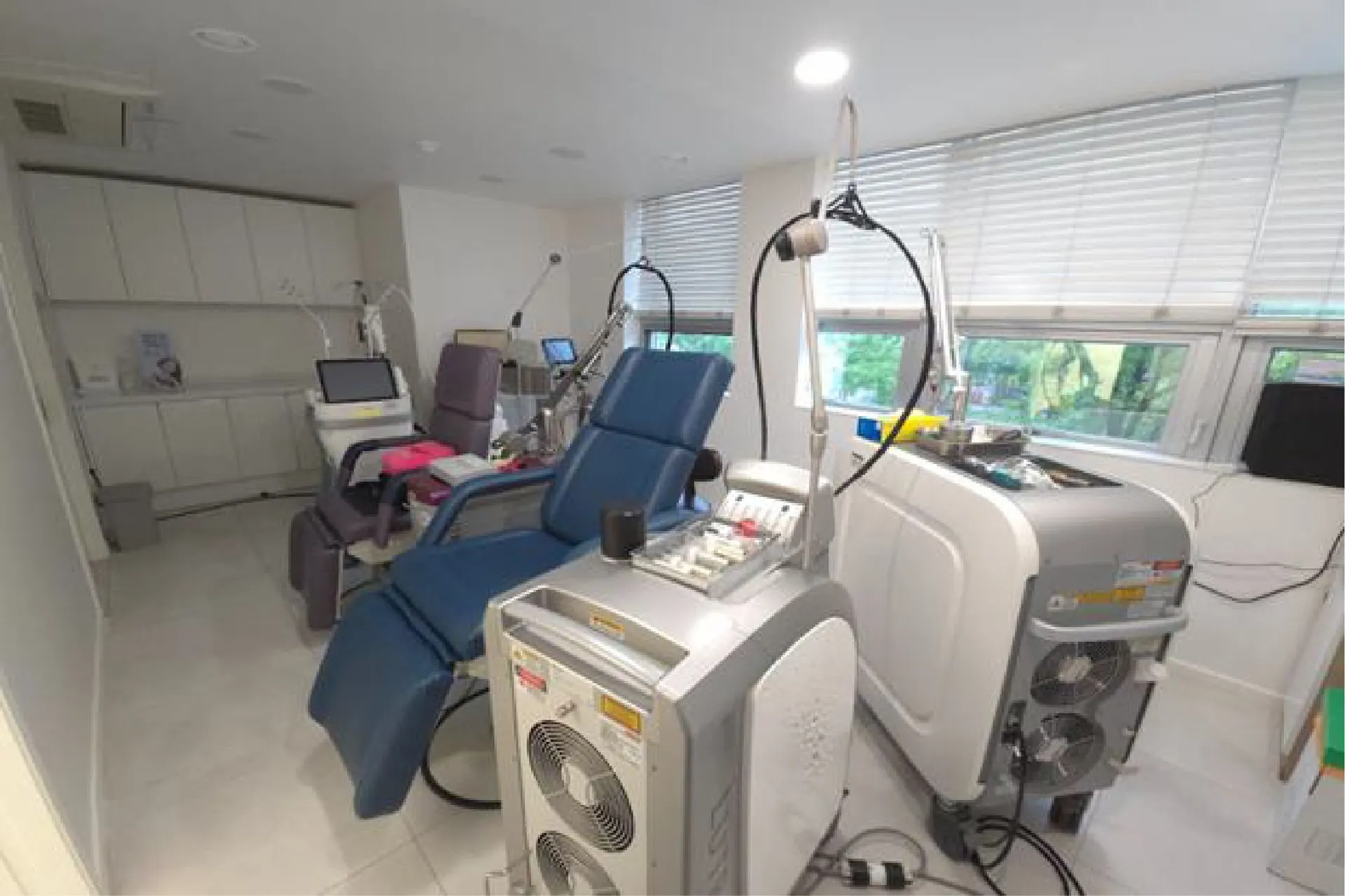
The clinic floors include an eye examination room with a slit lamp, a consultation room, operating rooms and recovery rooms. Hours are Monday to Friday 10:00–19:00 and Saturday 10:00–17:00, closed on Sundays and public holidays, so plan a weekday or Saturday arrival for the exam.
Eyelid surgery at Pascal is led by Dr. Kang Kyoungjin, MD, PhD in Anatomy, former professor of anatomy at Daegu Catholic University School of Medicine and President of the Korean Society for Oculoplastic Research. You can see the procedure outline on the ptosis correction treatment page and the other lid operations in the eyelid surgery group.
The smallest useful next step is a set of photos. Send clear front and side photos on WhatsApp: one looking straight ahead with your forehead relaxed, and one looking up. Add a line on when you first noticed the droop and whether it changes through the day. A coordinator passes them to your surgeon and replies with options, and the in-person exam confirms the plan.
Send front and side photos of your eyelids on WhatsApp
Get a free consultation in 1 minuteFrequently asked questions
Is a droopy eyelid from aging skin the same as ptosis?
Not always. Ptosis means the lid margin itself sits low because its lifting system is weak or stretched. Extra skin can hang over a lid that sits at a normal height, which looks similar but needs a different operation. Many people in midlife have some of both.
Can ptosis be treated without surgery?
Some non-surgical options exist, such as crutch glasses that support the lid, scleral contact lenses, and a prescription eye drop approved in the US in 2020 for acquired blepharoptosis. These support or briefly lift the lid rather than repair the tendon or muscle. Whether any suits you is a question for your eye doctor.
Can wearing contact lenses cause ptosis?
Long-term contact lens wear is thought to play a part in the stretched-tendon type of acquired ptosis. It is not the only factor, and age is a common one. If you wear lenses and notice one lid sitting lower, mention it at your eye exam.
Which doctor handles ptosis correction at Pascal Clinic?
Dr. Kang focuses on eyelid surgery, fat grafting and lifting, and Dr. Bae's work also covers eyelid surgery. You meet your surgeon at your consultation, where the plan is confirmed after the exam.
Can ptosis surgery done at another clinic be revised?
Pascal treats revision cases for eyelids. Send photos and the details of your previous surgery on WhatsApp, and the team will tell you whether a revision is likely to help. The final decision follows an in-person exam.
This article is general information, not medical advice. Individual results vary, and surgery carries risks such as bleeding, infection and inflammation. Your surgeon confirms suitability at an in-person exam. Read the medical disclaimer.

Eyelid surgery · Fat grafting · Lifting · Fillers · Skin