Trying to pin down a thread lift Korea cost before you book, and worried the number online won't match the sagging you see in your own mirror?
Read this before you lock in your travel dates.
By the end you'll know what moves the cost, what reviews get right and wrong, which thread methods exist, and what recovery looks like by week two. That makes it easier to tell whether threads fit your face and your budget, or whether you'd be paying for the wrong tool.
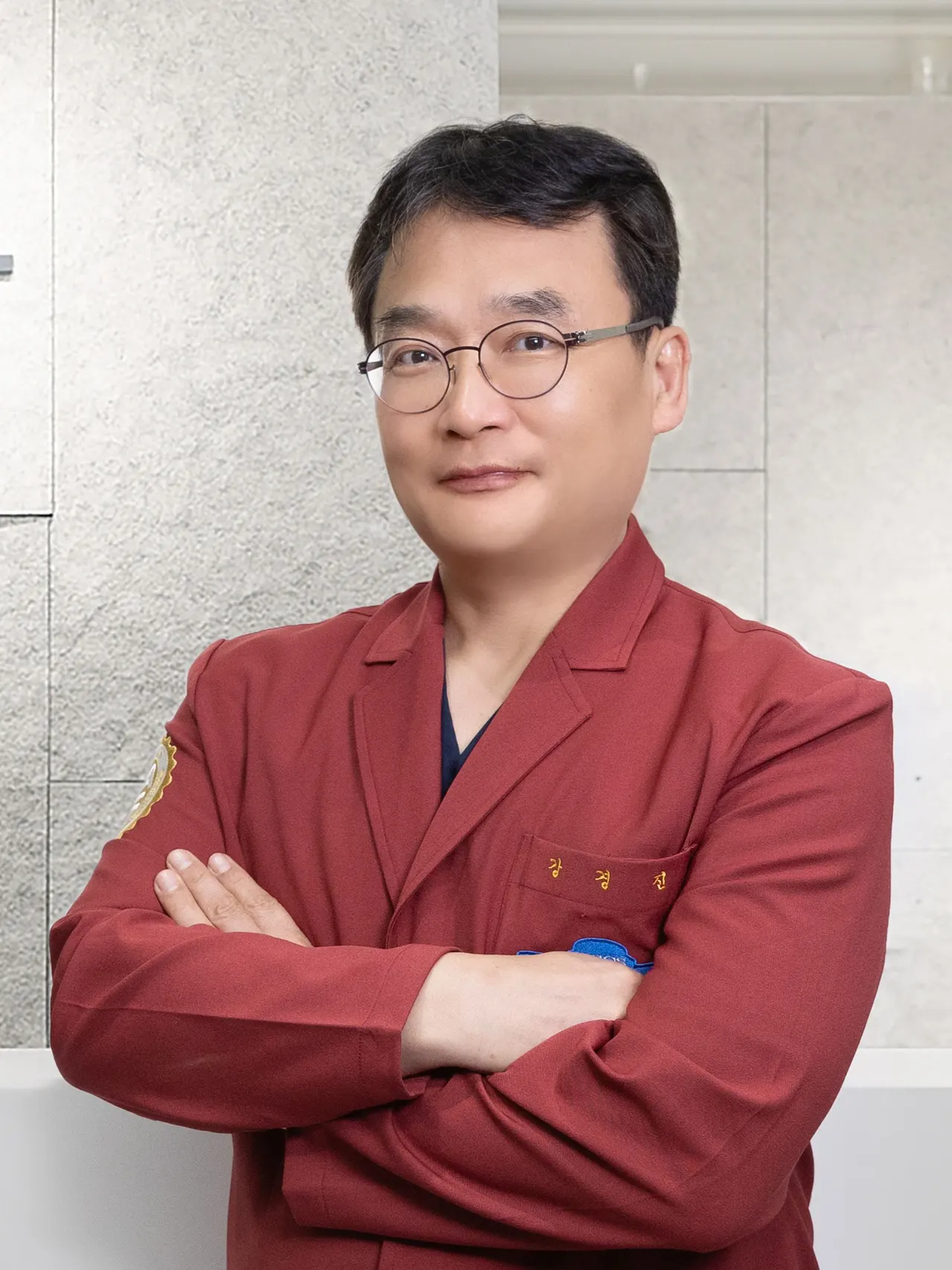
Hello, I'm Dr. Kang Kyoungjin, Representative Director of Pascal Clinic in Gangnam, Seoul.
My training began in anatomy, where I earned my PhD, and I developed SAFI, a lifting fat-grafting method. Plastic surgery, dermatology and jaw surgery share our building, so thread lifting, Ultherapy, Renuvion and surgical facelift sit on one menu. Our price list is published on the site.
I wrote this because many people buy threads for sagging that sits deeper than a thread can hold, while others book a bigger operation than their skin needs.
Your cost comes down to the thread type and count, the number of areas, anything combined with it, and how many days you need in Seoul.
If you'd like a figure for your own face, message us on WhatsApp with your goal and clear front and side photos, and name the one area that bothers you most. A coordinator passes them to your surgeon and replies with options and the matching price-list lines.
Send front and side photos on WhatsApp and ask what threads would cost for your face
Get a free consultation in 1 minuteWhat decides the cost of a thread lift in Korea?
You found a thread price that looks low, and you can't tell what it leaves out. The short answer on thread lift Korea cost: it depends on the thread type and count, the areas treated, anything you add on the same trip, and how many days you stay in Seoul. The exam then sets your quote.
On our menu, Thread Lifting (COG & Mint Threads) sits under Lifting & Injectables, next to Ultherapy, Renuvion, botulinum toxin and fillers. Thread lifting places absorbable medical threads in the dermis or the SMAS layer to lift sagging skin. How many threads, which type and which layer they sit in all change the work involved. These are the factors that move a Korean thread lift cost for one person:
| Factor | Why it moves the cost |
|---|---|
| Thread type and count | Our menu lists COG and mint threads, and the number used follows your tissue |
| Areas treated | Jawline, cheeks, neck and the area under the chin each need their own threads |
| Combined treatments | Some people pair threads with filler or Ultherapy on the same trip |
| Anesthesia | Numbing or sedation is discussed at your exam, and it can change the visit |
| Days in Seoul | Leaving room to be seen again before your flight adds nights |
The thread lift price in Korea on our price list is shown in Korean won, before 10% VAT.
The factor most people miss isn't on any list: whether threads can hold your tissue at all.
Threads or a facelift: the decision that moves the cost most
Threads lift by holding tissue from the inside, without an incision, which is why recovery is usually shorter.
A facelift lifts the skin and the deeper SMAS layer through an incision in front of or inside the ear, where the scar is hidden. The length of surgery, the type of anesthesia and the follow-up schedule are set at your exam, and the price is quoted after it.
Doctor's note
I started in anatomy, and I still think good results begin with an exact understanding of structure, not with feel. Jowls and neck are different problems. In a jowl, the cheek fat and the SMAS layer holding it have slid below the jawline, and a thread may be able to catch that. In the neck, the platysma muscle bands and loose skin have dropped, and a thread has far less to grip. So before anything else I ask which layer has dropped and how much it weighs. A thread anchored in tissue too heavy for it will not hold, and the price of the thread does not change that.
Say you're 56, your jowls have started to soften, your skin is still fairly firm, and you fly home on day six. That is the pattern where threads usually come up, because the lift asked of them is small. Now change one detail: deep folds at the nose and mouth plus loose neck skin. Threads would then be asked to carry more than they usually hold, and a facelift conversation makes more sense. Your surgeon will explain what that does to your days in Seoul.
Which thread lift methods are on the menu?
Our menu lists thread lifting with COG and mint threads. "COG" is a general term for threads with small barbs that grip tissue as they're placed. Which type you get and how many are used come from your tissue and the area, which is one reason two quotes for "a thread lift" can differ.
People also search "PDO thread lift Korea". PDO (polydioxanone) is an absorbable material used in many lifting threads. If the material matters to you, ask which one your plan uses when you write.
A chin thread lift usually means threads along the jawline or under the chin to firm a softening contour. Searches for a Korea nose thread lift are about raising a low bridge with threads. Nose threads aren't a separate item on our menu. For a low bridge, what we list is rhinoplasty for a low nasal bridge, which is surgery and a different conversation.
If you're weighing threads against an energy device, our comparison of Ultherapy and Ultherapy Prime covers the ultrasound side. The thread lifting page lists what the treatment involves.
What do thread lift reviews get right, and what do they miss?
Review threads about a thread lift in Seoul tend to repeat three claims. Here is how each holds up medically.
"It's a facelift without surgery." Partly true. There's no incision, and many people return to daily life quickly. Threads can't reposition tissue the way an operation does, though, so the lift is usually more modest.
"The results last for years." The threads are absorbable, so the mechanical lift fades as they dissolve. How long a visible change lasts turns on skin thickness, age and the area treated. Reviews that quote a thread lift Korea cost rarely say how loose the skin was to begin with.
"Dimples and pulling mean it went wrong." Not necessarily. Puckering and tightness are common in the first days and often settle. Dimples that stay, a thread end you can feel through the skin, or pain that grows are reasons to be seen.
What does recovery look like 2 weeks after a thread lift?
In the first days, swelling, bruising and a tight feeling when you smile or chew are common. For many people these ease over the first week.
By 2 weeks after a thread lift, the swelling has often largely gone and bruising has faded. A pulling feeling when you yawn or open wide can linger. Small irregularities that remain at this stage are worth showing to a doctor rather than waiting out.
General aftercare advice often includes sleeping on your back, skipping facial massage and avoiding very wide mouth opening for a few weeks. Your own instructions come from your surgeon, so follow those over anything general.
If your main worry is whether you can fly home looking presentable, send your travel dates and ask which option fits that window. A plan built around your real flight date is easier to price than a guess.
Send front and side photos on WhatsApp and ask what threads would cost for your face
Get a free consultation in 1 minuteRisks and side effects to know
The American Society of Plastic Surgeons lists thread lift risks that include infection, visible or palpable threads, dimpling and threads that shift. Surgery carries risks such as bleeding, infection and inflammation, and your surgeon explains them before you decide.
The common reactions are usually temporary: swelling, bruising, tenderness and some puckering or asymmetry in the first week or two.
As general medicine, these are reasons to wait or to talk it through first:
- an active skin infection or inflamed acne in the area
- pregnancy or breastfeeding
- a bleeding disorder, or blood-thinning medicine you can't pause on medical advice
- heavy sagging that threads are unlikely to hold
- a history of poor wound healing
After you fly home, spreading redness, warmth, fever, discharge or a thread end coming through the skin are reasons to see a local doctor promptly. Your surgeon confirms suitability at an in-person exam.
Planning your days in Seoul
We're at 157 Dosan-daero in Sinsa-dong, a short walk from Sinsa Station (Line 3 and Shinbundang Line), Exit 8. Hours are Monday to Friday 10:00–19:00 and Saturday 10:00–17:00, and we're closed on Sundays and public holidays.
If you land on a Saturday evening, your first visit is Monday. Don't plan your first appointment for your last day. Leave a few days between treatment and your flight, so bruising has time to settle and you can come back if something feels off. Confirm the number of days when you book.
A facelift changes the trip. The number of days and follow-up visits is set at the exam, so ask before you book flights.
On WhatsApp, send your front and side photos with your travel dates, and the one question you most want answered, such as "is my jawline a thread case or a facelift case?" A coordinator passes them to your surgeon, who replies with options and the matching price-list lines. When you come in, your surgeon examines you and recommends the option for your jawline and your travel dates.
Frequently asked questions
Can I get a quote in US dollars?
Our price list is in Korean won, before 10% VAT. The final quote follows your exam, because the right procedure and extent depend on your anatomy.
Does a thread lift hurt?
Many people feel pressure and some soreness, and local numbing is commonly used. Tenderness when chewing or yawning is common for the first several days.
Will people be able to see the threads?
Usually not once swelling settles. In thin skin a thread end can sometimes be felt or seen, and that is a reason to be checked by a doctor.
Can threads be combined with filler or Ultherapy on one trip?
Some people combine them. Whether that suits your face, and how it changes the cost, is part of what your surgeon works out with you at the exam.
Which doctor would I see?
Dr. Kang focuses on eyelid surgery, fat grafting and lifting. Dr. Bae focuses on scar reconstruction, facelift, nose and eyelid surgery, and Dr. Han on facelift. You meet your surgeon at your consultation.
This article is general information, not medical advice. Individual results vary, and surgery carries risks such as bleeding, infection and inflammation. Your surgeon confirms suitability at an in-person exam. Read the medical disclaimer.
Eyelid surgery · Fat grafting · Lifting · Fillers · Skin